Science, Space and Technology News 2024
Recent research shows that competition, not just climate, significantly influenced hominin evolution, with the Homo genus exhibiting unique speciation patterns that diverge markedly from other vertebrates.
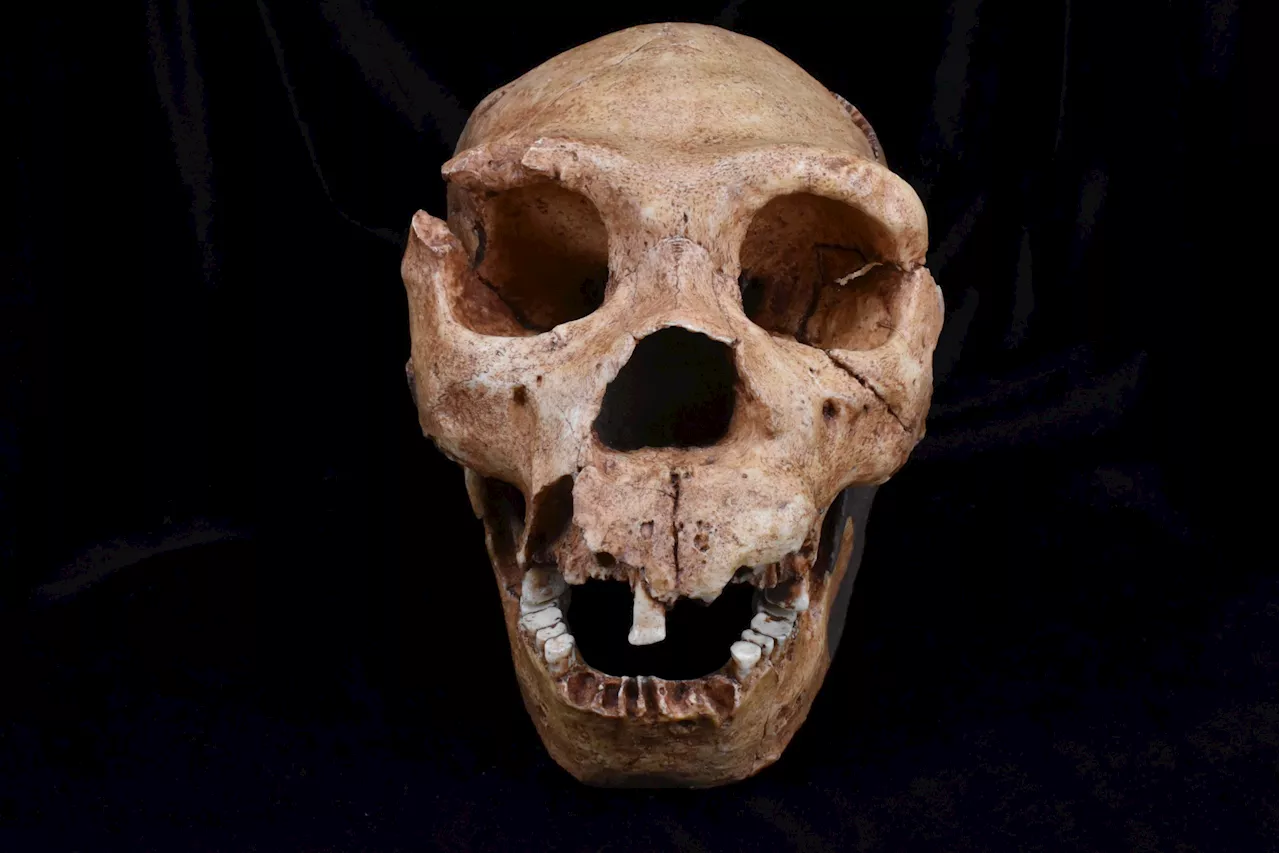
A cast of the skull of, one of the hominin species analyzed in the latest study. Credit: The Duckworth Laboratory, University of Cambridgesuggests that interspecies competition significantly influenced the evolutionary trajectory of hominins, resulting in a “bizarre” evolutionary pattern for the Homo lineage. This research also proposes revised timelines for the emergence and extinction of various early human ancestors.. In most, however, interspecies competition is known to play an important role. Now, research shows for the first time that competition was fundamental to “speciation” – the rate at which new species emerge – across five million years of hominin evolution., also suggests that the species formation pattern of our own lineage was unlike almost anything else. “We have been ignoring the way competition between species has shaped our own evolutionary tree,” said lead author Dr. Laura van Holstein, a University of Cambridge biological anthropologist from Clare College. “The effect of climate on hominin species is only part of the story.”, one of the hominin species analysed in the latest study. Credit: The Duckworth Laboratory, University of Cambridge In other vertebrates, species form to fill ecological “niches” says van Holstein. Take Darwin’s finches: some evolved large beaks for nut-cracking, while others evolved small beaks for feeding on certain insects. When each resource niche gets filled, competition kicks in, so no new finches emerge and extinctions take over. Van Holstein used Bayesian modeling and phylogenetic analyses to show that, like other vertebrates, most hominin species formed when competition for resources or space was low. “The pattern we see across many early hominins is similar to all other mammals. Speciation rates increase and then flatline, at which point extinction rates start to increase. This suggests that interspecies competition was a major evolutionary factor.”, the findings were “bizarre.” For thelineage that led to modern humans, evolutionary patterns suggest that competition between species actually resulted in the appearance of even more new species – a complete reversal of the trend seen in almost all other vertebrates.there were, the higher the rate of speciation. So when those niches got filled, something drove even more species to emerge. This is almost unparalleled in evolutionary science.” The closest comparison she could find was in beetle species that live on islands, where contained ecosystems can produce unusual evolutionary trends.that led directly to modern humans are closer to those of island-dwelling beetles than other primates, or even any other mammal.”to. Van Holstein created a new database of “occurrences” in the hominin fossil record: each time an example of a species was found and dated, around 385 in total. Fossils can be an unreliable measure of species’ lifetimes. “The earliest fossil we find will not be the earliest members of a species,” said van Holstein., one of the hominin species analyzed in the latest study. Credit: The Duckworth Laboratory, University of Cambridge “How well an organism fossilises depends on geology, and on climatic conditions: whether it is hot or dry or damp. With research efforts concentrated in certain parts of the world, and we might well have missed younger or older fossils of a species as a result.” Van Holstein used data modeling to address this problem, and factor in the likely numbers of each species at the beginning and end of their existence, as well as environmental factors on fossilization, to generate new start and end dates for most known hominin species .She found that some species thought to have evolved through “anagenesis” – when one slowly turns into another, but lineage doesn’t split – may have actually “budded”: when a new species branches off from an existing one. This meant that several more hominin species than previously assumed were co-existing, and so possibly competing., probably evolved physiologically to expand their niche – adapting teeth to exploit new types of food, for example – the driver of the very different pattern in our own genus“Adoption of stone tools or fire, or intensive hunting techniques, are extremely flexible behaviors. A species that can harness them can quickly carve out new niches, and doesn’t have to survive vast tracts of time while evolving new body plans,” said van Holstein She argues that an ability to use technology to generalize, and rapidly go beyond ecological niches that force other species to compete for habitat and resources, may be behind the exponential increase in the number of– the ultimate generalisers. And competition with an extremely flexible generalist in almost every ecological niche may be what contributed to the extinction of all otherAdded van Holstein: “These results show that, although it has been conventionally ignored, competition played an important role in human evolution overall. Perhaps most interestingly, in our own genus, it played a role unlike that across any other vertebrate lineage known so far.” Reference: “Diversity-dependent speciation and extinction in hominins” by Laura A. van Holstein, and Robert A. Foley, 17 April 2024,
United States Latest News, United States Headlines
Similar News:You can also read news stories similar to this one that we have collected from other news sources.
 Orca’s Signature Black and White Patterns Help Them Hunt and HideWhy are orcas black and white? Learn how their unique eye patches and bellies help them hunt and hide underwater.
Read more »
 Communication Patterns of Older Adults with NPDOlder adults with Narcissistic Personality Disorder (NPD) tend to communicate with aggression and disagreeableness. A study shows that a significant percentage of older adults have diagnosable personality disorders, posing challenges for professionals and families.
Read more »
 Recurring Tropes in Breaking Bad: Analyzing the PatternsBreaking Bad had several recurring tropes that appeared in almost every episode, but they did not diminish the show's brilliance. This article explores some of these patterns and their significance within the series.
Read more »
 Sopranos Stars Reprise Their Roles For Bizarre Reason In Unearthed 14-Year-Old VideoTony and Carmela in The Sopranos
Read more »
 Make a Code Review Great Again: Patterns of Quick and Effective Code Quality ControlCode review is an essential tool for code quality control in the programming industry. This topic has caught my attention for many years, and I would like to sh
Read more »
 Sleep patterns, disorders differ between women and menSleep differences have implications for how women and men could be treated for sleep-related disorders.
Read more »