
The conflict's fifth week brought its widest expansion yet, with Iran-backed forces opening a new front and U.S. ground troops arriving in the region.
The conflict's fifth week brought its widest expansion yet, with Iran-backed forces opening a new front and U.S. ground troops arriving in the region. Bitcoin briefly fell to $65,112, its lowest level since the war-related February crash, before rebounding above $67,000 as Asian markets opened.
The latest escalation in the conflict, including Houthi involvement, new U.S. troop deployments and Iranian attacks on aluminum facilities, rattled global markets and pushed Brent crude to about $115 a barrel. Bitcoin's drop below its recent pattern of higher lows raises questions about whether its war-time trading range will hold, while surging oil and metals prices threaten broader inflation and could delay Federal Reserve rate cuts.Bitcoin dipped to $65,112 early Monday morning, its lowest level since the February crash, before recovering to $67,402 as Asian markets opened. The 24-hour range of $65,112 to $67,389 reflects a market that sold hard on overnight escalation headlines and found buyers near $65,000, a level that hasn't been tested since the war's opening weekend five weeks ago. Ethereum recovered 2% to $2,044, Solana gained 0.9% to $83.48, and XRP added 1.4% to $1.35. The 24-hour green across the board masks a rougher weekly picture though. BTC is still down 1% on the week, ETH 0.9%, XRP 1.9%, and SOL 3.7%. Tron is the one name sitting in green, up 2.6% in a day and 4.6% on the week, quietly outperforming the entire majors complex. The escalation this time came from multiple directions simultaneously. Iran-backed Houthi forces entered the conflict, opening a new front beyond the direct U.S.-Israel-Iran theater. Additional U.S. troops arrived in the Middle East, fanning fears of a ground operation. The Wall Street Journal reported Trump is weighing a military operation to extract uranium from Iran, though no decision has been made. And Iran attacked two aluminum production sites in the region, sending the metal up as much as 6% and extending the war's economic damage beyond oil and into industrial commodities. Brent crude rose 2.5% to around $115 a barrel, now up roughly 90% year-to-date. Asian equities fell sharply, with South Korea's benchmark down 3.2% on a technology stock selloff and Japan's Nikkei dropping 3.4%. S&P 500 futures pared losses and were trading roughly flat, suggesting some stabilization after the initial reaction. The $65,112 low matters technically. That level is within range of the $64,000 low from Feb. 28, the day the war started. Bitcoin has spent five weeks building a pattern of higher lows on each escalation, from $64,000 to $66,000 to $68,000 to $69,400 to $70,596. Monday's dip below $66,000 is the first time in weeks the floor has moved lower rather than higher. Whether it recovers and re-establishes the uptrend or marks the beginning of a break below the range that has held since the war began is the question for the rest of the day. Meanwhile, oil at $115 and aluminum spiking on direct attacks on production facilities means the inflationary impact is broadening beyond energy into industrial supply chains. That makes the Fed's position even harder and the rate cut timeline even more distant.As stablecoins evolve into core financial infrastructure, North America leads. This report maps the regulation, market shifts, and players driving adoption.Stablecoins are entering their third phase of evolution - the institutionalization era - becoming increasingly embedded into core financial infrastructure. As institutions prioritize transparency and compliance, regulated issuers like USDC, RLUSD, and PYUSD are steadily gaining share with RLUSD surpassing $1B in market cap within its first year. North America, leading in regulatory frameworks and institutional distribution, is at the center of it all. Hyperliquid’s validators cluster in AWS Tokyo alongside Binance, BitMEX and KuCoin, giving nearby traders a latency advantage, Glassnode data showsHyperliquid’s validator cluster in AWS’s Tokyo region gives traders located in or near Tokyo a latency advantage of roughly 200 milliseconds over U.S. and European participants, improving their queue position and fill quality.16 hours ago
United States Latest News, United States Headlines
Similar News:You can also read news stories similar to this one that we have collected from other news sources.
 Anya Taylor-Joy’s Sci-Fi Secret Weapon Is a 400+ Day Success StoryAnya Taylor-Joy on the red carpet
Read more »
 NASCAR Cook Out 400 Predictions, Odds & Picks — Martinsville SpeedwayUpdated Cook Out 400 odds, picks, props, matchups, and betting angles for 2026 at Martinsville Speedway.
Read more »
 Four weeks of Iran war: Here’s what has happened to oil marketsLeading up to the start of the war, crude oil was around $70 per barrel, with Brent Crude selling at $72 and West Texas Intermediate at $67.
Read more »
After 400 Laps, Who Will Take Home A Grandfather Clock?Here are all of the storylines heading into Sunday's NASCAR Cup Series Cook Out 400 at Martinsville Speedway, which will air on FS1 at 3:30 PM ET.
Read more »
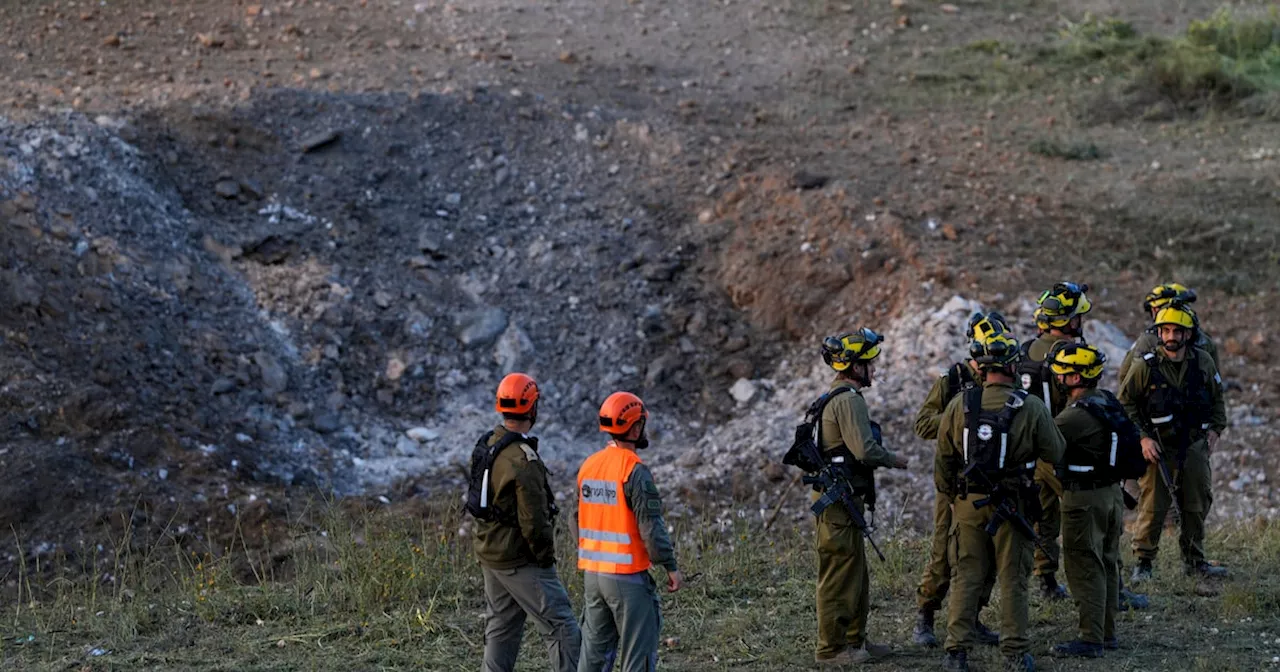 Pakistan says it will host U.S,-Iran talks as Iran warns against ground troopsPakistan announced Sunday that it will soon host talks between the U.S. and Iran.
Read more »
 2026 Cook Out 400 - Final Leaderboard - March 29, 2026View 2026 Cook Out 400 race, qualifier and practice leaderboards, live streams, bonus cameras, videos and odds information.
Read more »