
The most important stories for you to know today
The decision, not expected for months, could reshape what had been a longtime, constitutionally enshrined practice that has been challenged by the Trump administration.Public opinion on the issue is complicated.
Americans are heavily in favor of granting citizenship to children born to parents who were also born in the U.S. — or to those who immigrated to the U.S. legally. But they are split on — or much less in support of — automatic citizenship for children born to parents who immigratedThe decision, not expected for months, could reshape what had been a longtime, constitutionally enshrined practice that has been challenged by the Trump administration. Public opinion on the issue is complicated. Americans are heavily in favor of granting citizenship to children born to parents who were also born in the U.S. — or to those who immigrated to the U.S. legally. But they are split on — or much less in support of — automatic citizenship for children born to parents who immigratedIn the United States, birthright citizenship became part of the Constitution in 1868 as an effort to protect recently freed slaves. "All persons born or naturalized in the United States, and subject to the jurisdiction thereof, are citizens of the United States and of the State wherein they reside."Aimed at immigrants who cross the border illegally, the Trump administration argues that the Constitution's clause is outdated and has been abused.Public opinion is nuanced on birthright citizenship and can depend on how pollsters ask the question., people largely say they are supportive. But that support begins to crumble when respondents are asked about the parents' legal status — with significant divisions by party, race, age and how they get their information.But both showed higher support than other surveys, and both mentioned in their questions that the right is found in the U.S. Constitution.showed that more than 9 in 10 support birthright citizenship for those born to parents who immigrated to the U.S. legally, but — by a 50%-49% margin — were divided on giving it to those born to parents who are in the country illegally. had 51% in favor with 39% opposed. But that dropped considerably for those not in the country legally. Just 31% said they were in favor of granting citizenship to babies of people who are"undocumented," as the survey put it, and only 25% for tourists visiting the U.S. Many polls fairly consistently show majorities of Democrats, Latinos, Black Americans and those who are younger are in favor of birthright citizenship, while majorities of Republicans, especially white Republicans, are against. For example, Pew found three-quarters of Democrats in support of granting citizenship to children of those who immigrated illegally, but only a quarter of Republicans supported it. There is a split among Republicans, though. Only 18% of white Republicans are in favor, but 55% of Republican Hispanics are in favor. By race regardless of political party, Pew found three-quarters of Latinos and 61% of Black Americans were in favor of birthright citizenship for those whose parents immigrated illegally, but only 48% of Asian Americans and 42% of whites were. CHIP50, similarly, found 8 in 10 Democrats support birthright citizenship"regardless of their parents' immigration status," but only 39% of Republicans in favor. Those under 50 were in favor of birthright citizenship if the parents"immigrated illegally" by a 58%-41% margin, according to Pew. But almost 6 in 10 of those 50 or older were against it. There was also a divide depending on how long the respondent has been in the United States. Two-thirds of second-generation Americans in Pew's polling were in favor. But 55% of those who are third generation or higher were against it. PRRI found a big divide by how information is consumed, too. In that survey, 80% or more of those who most trust newspapers or mainstream TV news were in support of birthright citizenship,"regardless of their parents' citizenship status." But only 41% of those who trust Fox News support birthright citizenship, and an even lower number of those who prefer outlets that are considered even further to the right did, too.A trans comedy fest, delish Passover treats, a TreePeople exhibit and more of the best things to do this week.Tuesday is International Trans Day of Visibility, and what better way to mark the occasion than with some joy, namely L.A.’s trans theatre and comedy festival, “The Joy Who Lived.” Back for its second year with more than 30 shows, readings and workshops by trans and nonbinary artists, the festival opens with comedy-variety show Make sure to catch this first institutional show at LMU’s museum highlighting the work of L.A. muralist Noni Olabisi before it’s gone. The show features 40 pieces made from 1984 to 2022; Olabisi died unexpectedly in 2022, and her works were added to thepick up the two best Passover foods — matzo ball soup and chocolate-dipped macaroons — at all Superba locations. They are available for pre-order and pickup through April 9 at all locations.I went to a fantastic art talk with Cole Case and Shana Nys Dambrot last week, where Case talked about his paintings of the ongoing immigration protests in Los Angeles, which have deep art history references — and even some fun local news ones. Check out the powerful exhibit atrecommends going back to school with indie star Mitski, who’s playing the Hollywood High auditorium. She’ll also be there Tuesday, Thursday, Friday and Saturday. Tuesday, K-pop star Jackson Wang plays the Forum, indie torch singer Goldie Boutilier is at the Belasco, rising pop singer Sarah Kinsley is at the Fonda, and veteran Welsh noise-rockers McLusky play the Regent. On Wednesday, singer-songwriter Ricky Montgomery plays the Wiltern, and on Thursday, Philly emo bandThe alternative title for this comedy hit that sold out at the Edinburgh Fringe is, so I think you can see where this is going. Rom-com fans will get every nuanced joke in this feminist parody take on your favorite escapist movies with Kerry Ipema institutional show highlighting the work of L.A. muralist Noni Olabisi before it’s gone. Olabisi portrayed Black Americans with a truthful eye and examined the history of racism, particularly in her large-scale murals, including “Freedom Won’t Wait” , painted following the L.A. uprising after the Rodney King trial, and “To Protect and Serve” , which portrayed a history of the Black Panther Party and police brutality. The show features 40 pieces made from 1984 to 2022; Olabisi died unexpectedly in 2022, and her works were added to theMacArthur “Genius” Mary Halvorson brings her new jazz quartet project, CANIS MAJOR, to the Getty for a free concert that explores sound in a unique way. She's known for “crystalline single-note lines that seem to ‘bend’ time, kaleidoscopic harmonic turns, and an innovative use of effects — especially subtle pitch-shifting and delay — that expands the guitar into something orchestral and uncanny.”Whether you’re having a seder or not, pick up the two best Passover foods — matzo ball soup and chocolate-dipped macaroons — at all Superba locations. They are available for pre-order and pickup through April 9 at all locations.The Ravi Shankar Ensemble’s tour launches at the Alex Theatre with the ethereal sounds of world-class musicians celebrating the legendary sitarist's legacy. The evening will blend traditional sitar and tabla rhythms with contemporary arrangements; it’s a great introduction to the sounds that inspired everyone from the Beatles to John Coltrane and many more.Tuesday is International Trans Day of Visibility, and what better way to mark the occasion than with some joy, namely L.A.’s trans theatre and comedy festival,? Back for its second year with more than 30 shows, readings and workshops by trans and nonbinary artists, the festival opens with comedy-variety showA banner for last year's Nowruz celebration at UCLA. This year's celebration was canceled out of respect for the thousands killed this year in Iran.In Southern California — home to the largest Persian community outside of Iran — the annual festivities for Nowruz, the Persian New Year, have been overshadowed by, and in some cases, canceled because of the ongoing war in Iran.Nowruz coincides with the Spring Equinox and celebrates life, the beginning of spring, and the triumph of light over darkness. The celebrations typically last 13 days.Some Nowruz celebrations have been canceled. But others are still taking place, including an April 4 performance by the Pacific Symphony and guest Iranian musicians and artists. Shardad Rohani, former music director of the Tehran Symphony Orchestra, said it’s important to emphasize the holiday’s message of hope. “Without hope, there is really no future,” he said. “So we are really not a hundred percent in the mood of celebration, but we are hopeful.” In Southern California — home to the largest Persian community outside of Iran — the annual festivities for Nowruz, the Persian New Year, have been muted by the ongoing war in Iran. Nowruz coincides with the Spring Equinox and celebrates life, the beginning of spring, and the triumph of light over darkness. The celebrations typically last 13 days., which promotes Iranian arts and culture, canceled its 16th annual Nowruz event at UCLA this year. “It just was not something that was appropriate when so many Iranians are mourning the terrible loss of life in Iran,” said Alireza Ardekani, the foundation’s CEO.Some Nowruz celebrations are still taking place, including an April 4 performance by the Pacific Symphony and guest Iranian musicians and artists. Shardad Rohani, former music director of the Tehran Symphony Orchestra, said it’s important to emphasize the holiday’s message of hope. “Without hope, there is really no future,” he said. “So we are really not a hundred percent in the mood of celebration, but we are hopeful.” If you're enjoying this article, you'll love our daily newsletter, The LA Report. Each weekday, catch up on the 5 most pressing stories to start your morning in 3 minutes or less.Protesters march along Colorado Boulevard in Pasadena, California for the third wave of nationwide No Kings protests on March 28, 2026.Demonstrators took to the streets on Saturday in a number of communities across the L.A. region for the latest No Kings protests.: Organizers with No Kings say they were protesting"federal overreach" of the Trump administration and expected yesterday's nationwide day of action to be their largest single-day nationwide protest yet.: No Kings protests previously took place in June and in October last year; organizers say each protest brought out millions of people.Demonstrators took to the streets on Saturday in a number of communities across the L.A. region for the latest No Kings protests. In Pasadena, hundreds of demonstrators started their march at Pasadena City College in the morning, which ended with a rally at Pasadena City Hall. The energy was joyous, as a large truck with live musicians led people in protest. Many participants said they thought it was important to show up to voice their opposition against the actions of the federal government.“Especially things like taking away rights from trans people and sending people to ICE detention,” said Tatiana Becker of Pasadena, who now lives in London, England. “This country is not one that I recognize, and I remain an American voter, an American taxpayer." Before the start of the march, organizers stressed the importance of a nonviolent demonstration. Students, seniors, parents with their children and pets cheered as drivers along Colorado Boulevard honked in support. “We're here to voice our opinion, and provide numbers," South Pasadena resident Irene Barry said."We just need to come out in numbers, make sure everybody knows that most people aren't happy with the situation."Meanwhile, in Downtown L.A., between 50,000 and 100,000 people were expected in what No Kings organizers said was one of the largest demonstrations in the region. Protesters met at Gloria Molina Grand Park and City Hall beginning at 2 p.m., with a march scheduled to loop back to the same location. As the evening went on, some protesters continued to the Metropolitan Detention Center on Alameda, between Aliso and Temple. LAPD officials issued a dispersal order around 5:30 p.m. in that area, warning protesters to leave or be arrested. Less-than-lethal weapons were deployed. An LAPD spokesperson told LAist they made a total of 75 arrests — including eight minors — with no reported injuries among those taken into custody.Teacher Catherine Borek with her senior students at Dominguez High School in Compton on March 20, 2026. Dominguez has among the state's highest share of students passing the necessary classes for public university admissions.Statewide, 54% of high school students pass the classes minimally needed to enroll in the University of California or California State University systems as freshmen, according to a CalMatters analysis of traditional high schools.Low-income, Black and Latino students have among the lowest class-completion rates. English learners and students with disabilities also have low rates, but the numbers have climbed slightly the past few years.Last spring Dominguez High in Compton Unified had among California’s highest percentage of students graduating who met the UC and Cal State requirements — 96% were A-G ready, according to the California Department of Education.High school seniors across California are anxiously awaiting word on their public university acceptances. But thousands of other soon-to-be graduates are virtually locked out. A key reason? Nearly half haven’t taken the required classes. Statewide, 54% of high school students pass the classes minimally needed to enroll in the University of California or California State University systems as freshmen, according to a CalMatters analysis of traditional high schools. In recent years, the state has provided extra funding to help schools boost their numbers, but the readiness rate has only inched up. Low-income, Black and Latino students have among the lowest class-completion rates. English learners and students with disabilities also have low rates, but the numbers have climbed slightly the past few years.. The requirements are four years of English, three of math, two years each of science, social science and foreign language, and one year of art. Known as the A-G requirements, they often dictate a student’s schedule beginning in ninth grade or even earlier. It’s easy for a student to fall off track — by getting a D or F in a class, for instance, or by skipping a tough class like chemistry or trigonometry, or by not taking a class if their school doesn’t offer it. CalMatters looked at data from the 2024-25 school year for 1,468 public high schools, excluding about 800 alternative high schools, some specialized schools with high A-G rates, continuation schools and juvenile detention programs. The analysis shows that 222 of those schools posted A-G completion rates of less than 30%. More than 400 schools had A-G rates exceeding 70%.Schools may have few students completing the full suite of A-G courses for a variety of reasons, said Sherrie Reed Bennett and Michal Kurlaender, education researchers at UC Davis whoon the gaps in A-G rates across public high schools. Some schools may offer the courses, but students don’t enroll in them. Or students earn below a C in these courses and don’t retake them after school or during the summer. Next, teachers may not allow students to repeat assignments in order to avoid having to retake a class; Ideally, all students should be enrolled in A-G courses, Bennett and Kurlaender said. It’s the only way to guarantee that all students have the option of enrolling in a four-year university after high school. Within 16 months of finishing a traditional high school, 86% of students who graduated with the required UC and Cal State coursesLast spring, Dominguez High in Compton Unified had among California’s highest percentage of students graduating who met the UC and Cal State requirements — 96% were A-G ready, according to the California Department of Education. “To this day, you get that sense of, like, ‘Wait, who, Compton?'” said Jorge Torres, the district’s director of college and career readiness, on how the district’s recent turnaround is a constant surprise to people he meets at conferences. At Dominguez High, around 91% of students are eligible for a federal school meal waiver, making the campus’ student body among the poorest in the state. Reaching the high A-G rate took about 10 years, said Torres, and is the result of a few key decisions the district and the school’s principal made. In 2015, the district created Compton Early College High School, which emphasized a college-going culture for its students and exposed many to a wide array of community college courses. By 2020, all of the school’s students were graduating on time andBut the school is smaller than Compton Unified’s other comprehensive high schools. Could they scale their results across the district’s larger high schools? This meant Dominguez no longer offered classes that didn’t meet the UC and Cal State standards, said principal Caleb Oliver. He added an extra period during the school day so students could retake an A-G course without staying late or enrolling in the summer. The school also revised its student counseling model so that two counselors stay with the same cohort of students for all four years. Torres said that too made a difference. So did adding a counselor who focuses only on college admissions and preparation at all of Compton Unified’s traditional high schools. The year the school adopted the A-G graduation requirement, about two-thirds of its seniors finished high school having met the UC and Cal State admission criteria. By 2024, when the first freshmen held to the higher standard were graduating, about three-quarters of students graduated A-G ready. The next year, the rate jumped more than 20 percentage points, to 96%. The work that district and school staff put into Dominguez High School “seems like a strong example of best practices,” said Iwunze Ugo, a researcher at the Public Policy Institute of California who has publishedGisele Genovez, a Dominguez senior, will have taken 14 community college courses by the time she graduates this spring. She applied to UC and Cal State schools with nursing programs and earned acceptances to several. “This school has really shown the importance of taking college courses, how it will benefit you, and it’s not something that you’re going to regret in the future,” she said. As a Dominguez freshman, Alexis Hernandez didn’t think he’d attend college because he assumed he’d be priced out as a low-income student. But the school’s A-G requirement prepared him anyway. “Just going to work after high school” was the route for students from low-income families, he thought. By 11th grade, he was excited to apply to college the following year and live on a university campus that’s within driving distance of home. Now a senior, Hernandez has taken one community college course and has been accepted to several Cal State and UC campuses while he awaits results from other campuses. How will he choose which nearby school to attend? Whichever awards him the most financial aid, he said. According to state data, slightly more than half of Dominguez students head to college within 16 months of graduating, though the latest figures are from 2023. That’s a bit lower than previous years, but lately, fewer of the school’s college-bound students enroll in community college and Past a certain point, the school is limited in what its students choose to do after high school, Oliver said. Colleges play a role in attracting students as well. Programs that expose admitted students to free summer courses and introduce research-tested study skills can be the determining factor for an admitted student deciding whether to enroll, he said. OliverBut students benefit “if they sign up for it,” he cautioned. “Everything is if they sign up for it. We can offer, but we need you to take hold of it.”CalMatters looked at data from the 2024-25 school year for 1,468 public high schools. We excluded about 800 alternative high schools, some specialized schools with high A-G rates, continuation schools and juvenile detention programs. To conduct the analysis, CalMatters merged the California Department of Education’s graduation rate by high school for the 2024-25 school year, which contained A-G rates, with the Public Schools and Districts Data File and the department’s data on schools in the Free and Reduced Price Meal program, a common way to measure low-income status at a school.Schools with lower A-G completion rates tended to have higher numbers of English learners or students in special education. Plenty of those students enroll in A-G courses, but if they need extra support, such as speech therapy or language development, for a period or two a day, it’s difficult to complete all the required courses needed to gain admission to UC or CSU, school administrators said. Bennett and Kurlaender at UC Davis said that’s a poor excuse, and that far more students in special education or who are English learners should be able to complete A-G courses. To help schools boost their numbers, the state providesAt Mt. Diablo High and Ygnacio Valley High, both in Concord, nearly 90% of students are English learners or low-income. Both schools also have higher-than-average numbers of students with disabilities. And both schools had A-G completion rates under 25% last year. “This is a huge priority that we’re working hard on,” said Heather Fontanilla, director of college and career readiness for Mt. Diablo Unified School District, which includes both schools. “Ultimately, we want students to have post-secondary choices, including the chance to go to a four-year college. We do not want their transcript making decisions on what options they have available.” The district is trying to raise its numbers by changing more courses to be A-G eligible, although the tough part is getting students to pass those classes. Students have to earn a C or better in an A-G course for it to count toward college admission, but only need a D for the class to satisfy the graduation requirement. “We tell the kids, D equals diploma, but C equals college,” said Fontanilla. “All it takes is for a student to get below a C and everything starts to spiral.” That’s because students who get below a C have to retake the class if they still want to enroll at a 4-year college. Make-up classes are typically held after school, a potential conflict for students who have jobs or family responsibilities. So the district has started offering tutoring for students who are struggling, in hopes of saving their A-G eligibility before their C slips to a D. The district is also expanding outreach to parents so they can better support their children’s college-preparation efforts.“We have a great graduation rate,” said Clara Schmiedt, assistant superintendent, noting that Manteca High’s graduation rate is nearly 95%, and the school was recently named a California Distinguished School. “But raising our A-G rate is a priority for us.” One issue at Manteca High has been chemistry. Many students have struggled to pass, so the district is introducing a new curriculum and adding a new science teacher. Another problem is foreign language. The school only offers a few French classes, so students taking French might not be able to fulfill the foreign language requirement for A-G. The district is also trying to change the culture around college. It’s expanding its dual enrollment program at a local community college, and sends dozens of students every summer to an academic institute at University of the Pacific in Stockton.
United States Latest News, United States Headlines
Similar News:You can also read news stories similar to this one that we have collected from other news sources.
 Supreme Court prepares to review Trump executive order on birthright citizenshipFox News Channel offers its audiences in-depth news reporting, along with opinion and analysis encompassing the principles of free people, free markets and diversity of thought, as an alternative to the left-of-center offerings of the news marketplace.
Read more »
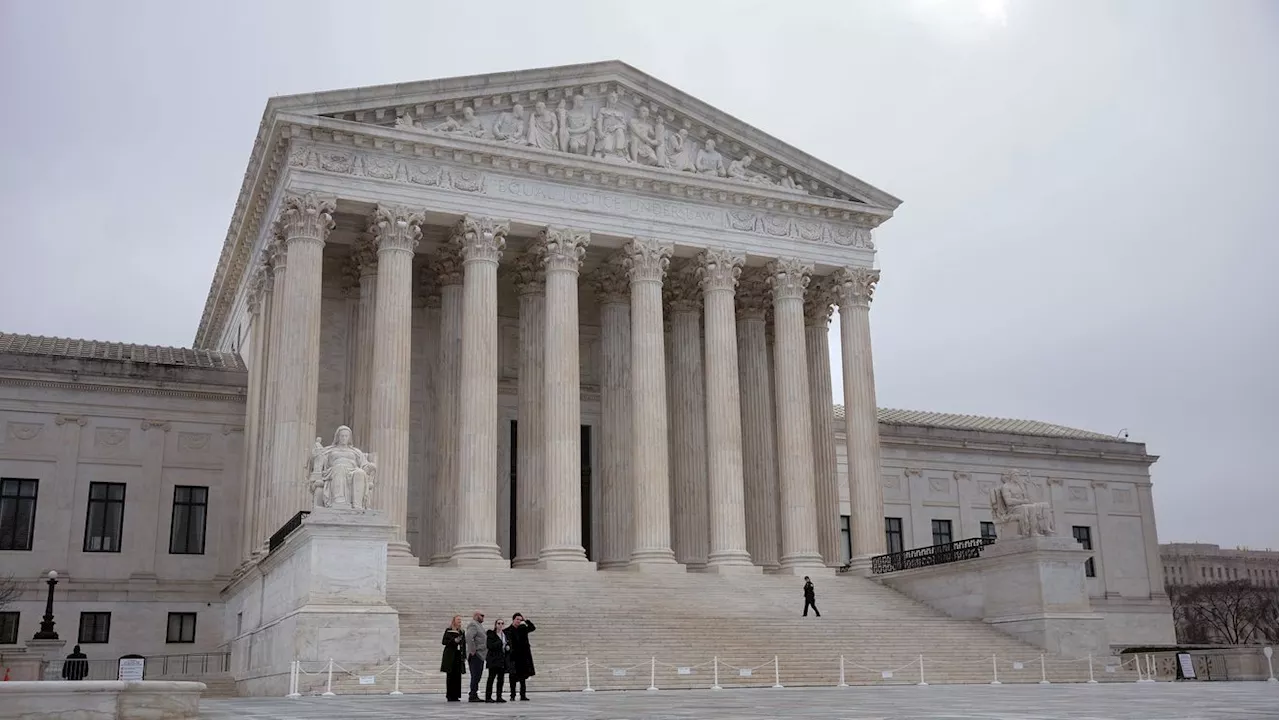 U.S. Supreme Court to examine birthright citizenship WednesdayThe U.S. Supreme Court will hear arguments Wednesday in a case to determine to whom the United States can extend birthright citizenship.
Read more »
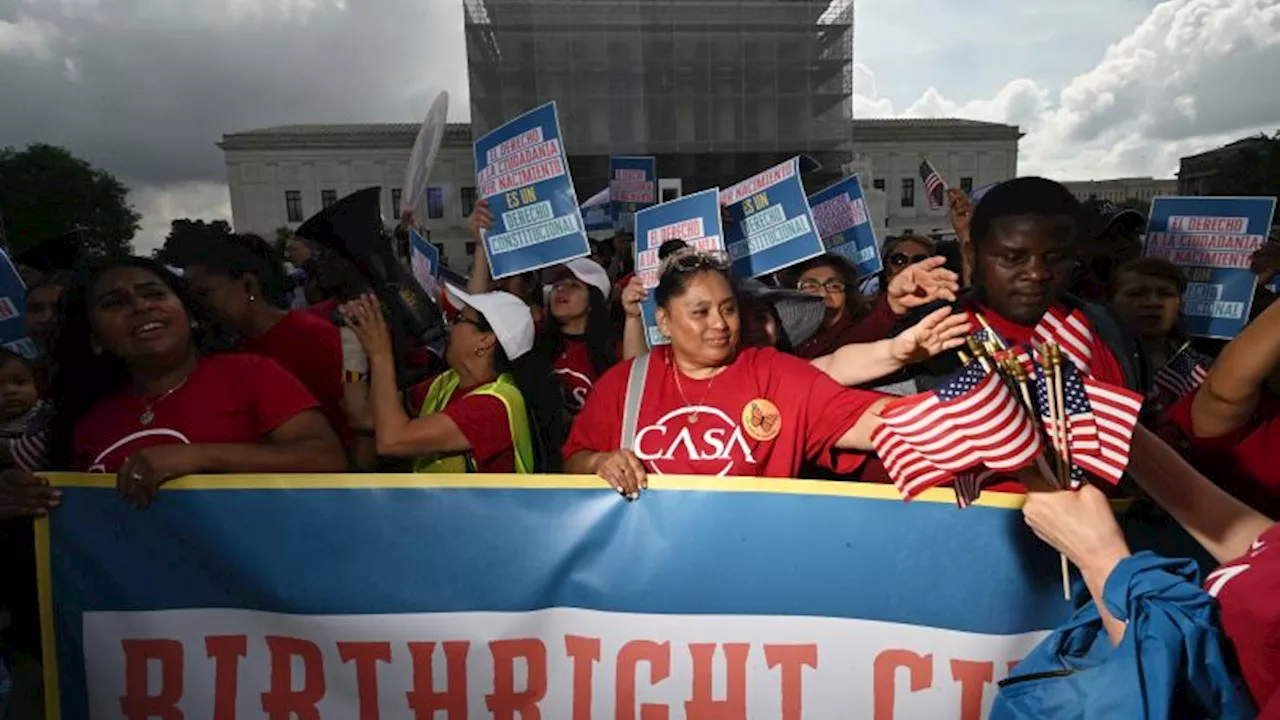 Supreme Court fight over birthright citizenship threatens ‘chaos’ in proving newborns’ statusJustice Brett Kavanaugh sounded like a fired-up prosecutor last year as he shot off a withering series of nuts-and-bolts questions about how President Donald Trump would carry out his plan to rewrite of the way birthright citizenship has been understood in the United States for more than a century.
Read more »
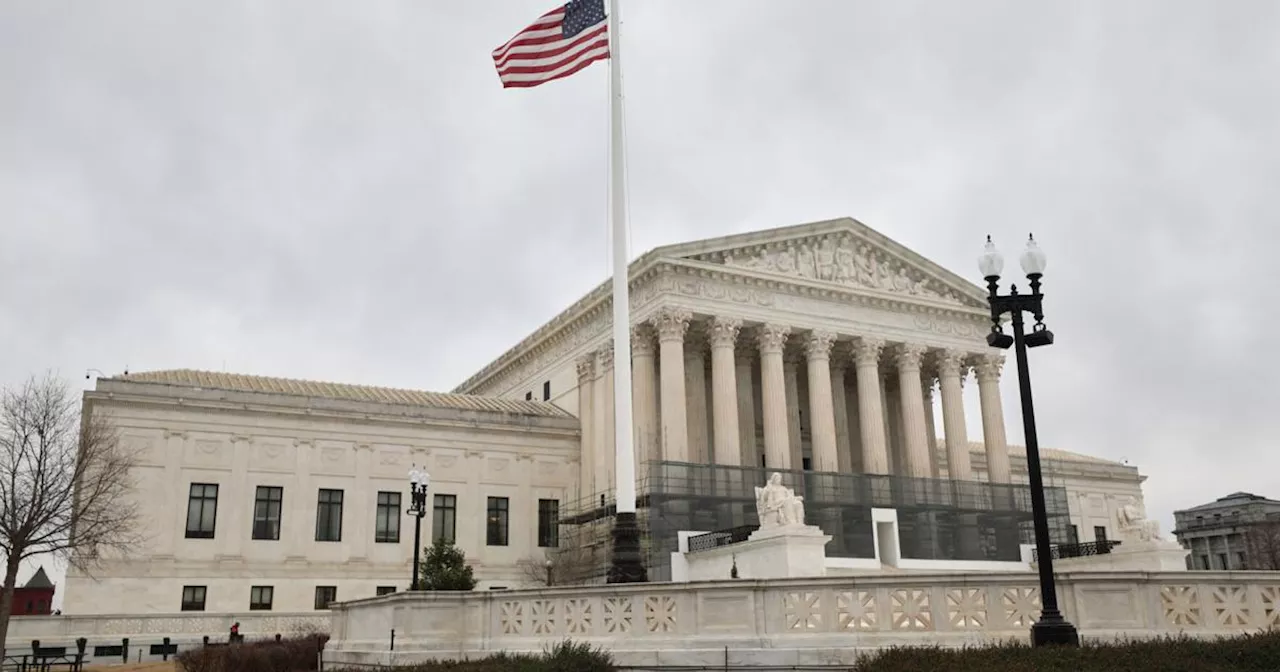 Much is at stake for The City as Supreme Court takes up birthright citizenshipJustices will hear case Wednesday that has the potential to affect thousands of residents
Read more »
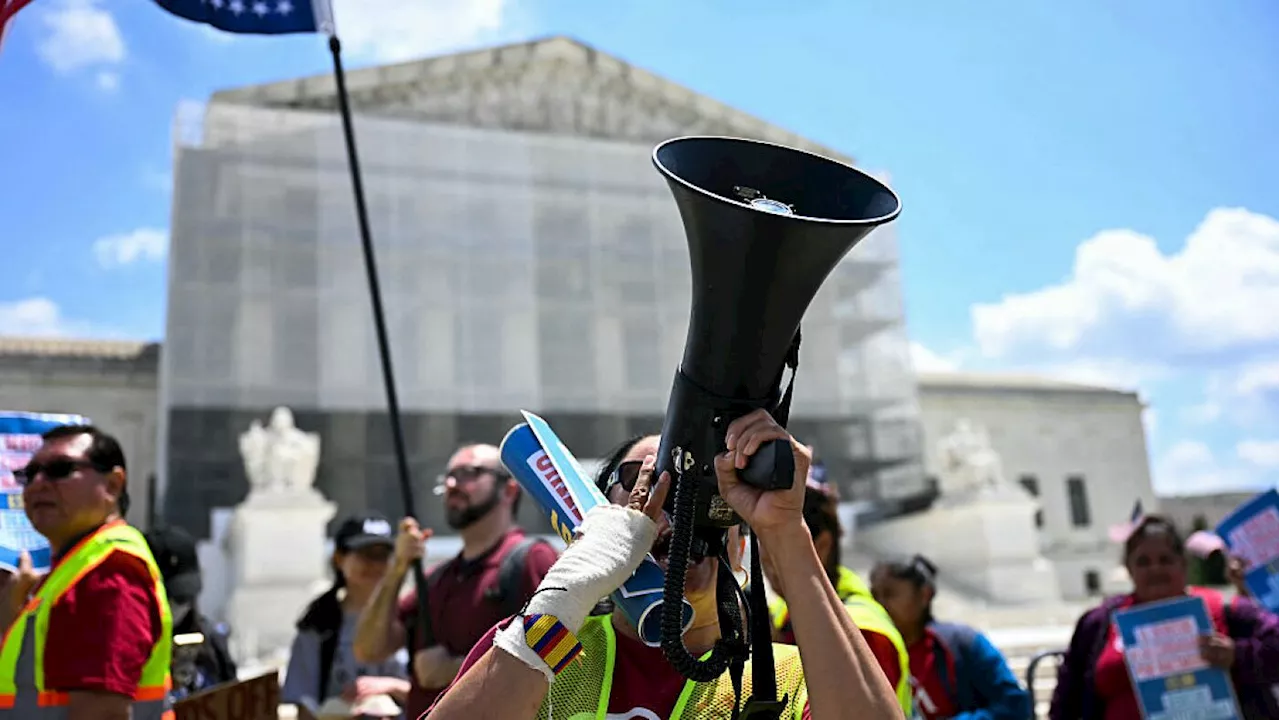 As birthright citizenship goes to Supreme Court, here's how Americans feel about itThe Supreme Court will hear arguments Wednesday on whether all children born in the United States can continue to automatically receive citizenship.
Read more »
 How a SCOTUS decision on birthright citizenship could impact education accessAll children, regardless of immigration status, have the right to a free K-12 public education. But without birthright citizenship, access to schools and colleges could get complicated.
Read more »