
This article delves into the less-recognized symptoms of ADHD, highlighting their profound impact on daily life, relationships, and well-being. It explores challenges with time perception, working memory, emotional regulation, and sensory processing.
While the commonly recognized symptoms of ADHD , such as inattention, hyperactivity, and impulsivity, are important, they represent only the tip of the iceberg. Beneath these surface traits lie a complex array of less obvious symptoms that significantly impact the daily lives of individuals with ADHD .
These often-overlooked symptoms can affect time perception, working memory, emotional regulation, and sensory processing, profoundly shaping an individual's experience of the world and their interactions with it.Adults with ADHD often present these symptoms differently compared to children, which can lead to years of misdiagnosis, misunderstanding, or self-blame. One key challenge for individuals with ADHD is their subjective experience of time. They often struggle to estimate how long a task will take or even to monitor the present moment. This can cause a feeling that experiences exist only in the 'now' or 'not now,' leading to difficulties in organizing, prioritizing tasks, and maintaining punctuality.Another significant symptom is working memory impairment. Working memory is the cognitive process that holds information readily accessible for use in completing a goal. While individuals with ADHD have the same storage capacity as neurotypical individuals, their attention span is often shorter, making it harder to keep relevant information 'online.' External stimuli and internal thoughts unrelated to the task at hand constantly interfere with the working memory system, replacing crucial pieces of information. This explains why completing tasks can be challenging for individuals with ADHD, as they are constantly bombarded with distractions and struggle to maintain focus on the task at hand. Additionally, emotional regulation can be significantly affected in ADHD. This core brain function adjusts the volume of perceived emotions, allows for self-soothing mechanisms, and determines our responses to the environment. When this function is disrupted, emotions feel overwhelming and intense. A sad event becomes heart-wrenching, and a happy one becomes euphoric. These intense emotional reactions can lead to misunderstandings and social difficulties, as individuals with ADHD may be perceived as 'too sensitive' or 'overreactive.
ADHD Attention Deficit Hyperactivity Disorder Symptoms Time Perception Working Memory Emotional Regulation Sensory Processing
Trending
 A gorgeous April afternoon in store across the Denver metro area
  ‘Artemis Mission Cannot Lead To Interplanetary Wild West,’ Astronomer Warns
  Trump says US forces will ‘finish the job’ soon in first prime-time speech since starting Iran war
  Former Wisconsin football player, who left the sport amid mental health struggles, dead at 24
  Drew McIntyre Gives Honest Take About His Recent WWE Title Reign
  U.S. Sen. Bernie Sanders introduces bill that could keep the Padres in San Diego
 United States Latest News, United States Headlines
Similar News:You can also read news stories similar to this one that we have collected from other news sources.
 Attention Deficit Hyperactivity Disorder Linked to Shorter Life ExpectancyA new study suggests that individuals with ADHD may have a significantly shorter life expectancy compared to those without the disorder. Men with ADHD may live about seven years less, while women may live nearly nine years less. The study, which analyzed data from over 30,000 adults with ADHD in the UK, highlights the need for increased support and treatment for people with ADHD to address the potential health risks associated with the condition.
Read more »
 ADHD Linked to Shorter Life Expectancy, Study FindsA new UK study reveals that adults with ADHD have a shorter life expectancy compared to their neurotypical counterparts. The study, published in The British Journal of Psychiatry, found that women with ADHD live 8.6 years shorter lives, while men with ADHD live 6.8 years less. Experts suggest modifiable risk factors and unmet treatment needs for both ADHD and co-occurring mental and physical health conditions contribute to this disparity.
Read more »
 Adults With ADHD Linked To Shorter Life ExpectancyAdults with attention deficit hyperactivity disorder, otherwise known as ADHD, may face a shorter life expectancy than their peers.
Read more »
 More Adults Diagnosed With ADHDDiagnoses of attention-deficit/hyperactivity disorder (ADHD) in adults have been rising for decades, with a recent acceleration in the last few years. This increase is attributed to a broadened definition of ADHD, greater awareness of the condition, and potential pandemic-related factors. Adults with ADHD often experience challenges with focus, impulsivity, time management, and relationships. The rise in diagnoses has sparked discussions about whether ADHD is being overdiagnosed.
Read more »
 More Adults Are Being Diagnosed With ADHDDiagnoses of attention-deficit/hyperactivity disorder (ADHD) in adults have been rising for years, with new data suggesting that more than 15 million U.S. adults have been diagnosed. The condition, which often starts in childhood, can make it hard for people to pay attention and control impulsive behaviors. Adults with ADHD talk about having trouble focusing on tasks, juggling responsibilities, and planning and managing their time.
Read more »
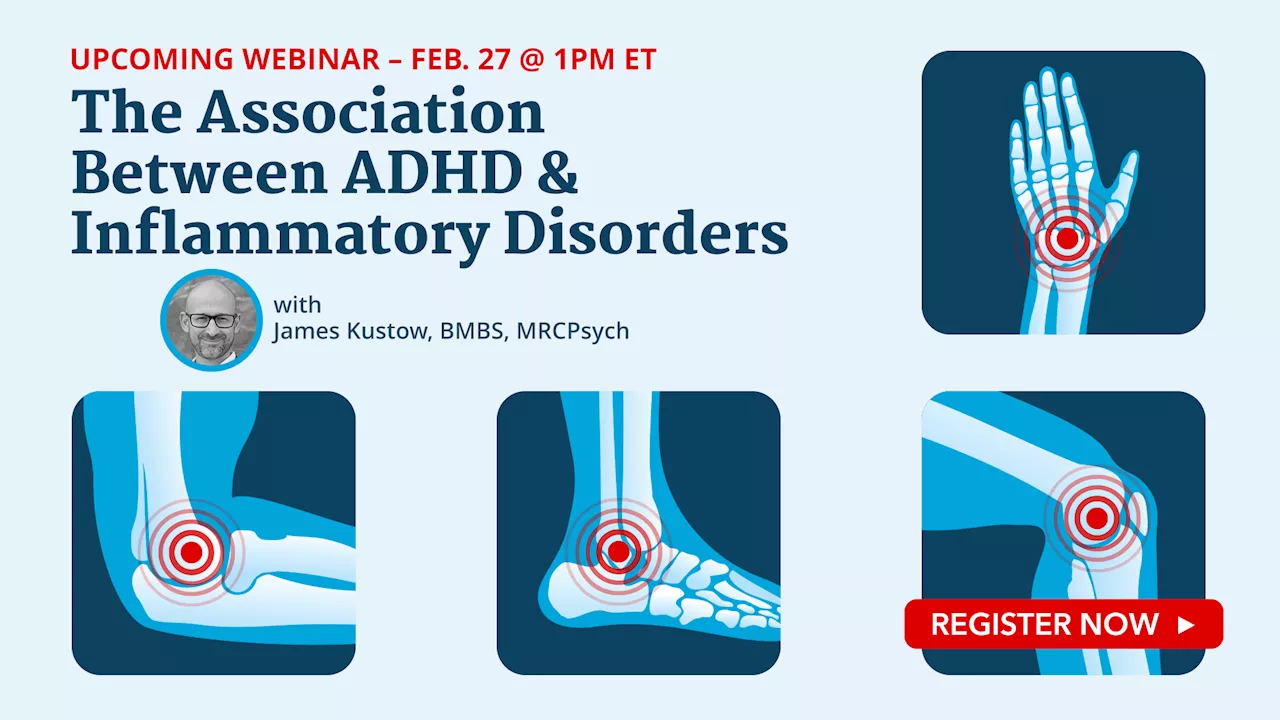 ADHD and Inflammation: A Webinar with Dr. James KustowJoin a free webinar to explore the connection between ADHD and inflammation, featuring Dr. James Kustow, a leading expert in adult ADHD. Learn about the prevalence of autoimmune conditions in individuals with ADHD, the potential genetic links, and the role of hypermobility in understanding this relationship. Discover how inflammation may contribute to broader health challenges and gain valuable insights into managing both ADHD and inflammation-related issues.
Read more »