
A programmer’s IDE contains a source code editor, a compiler, a debugger, build automation tools & project management and version control functionalities.
Beware the ides of March. So said the soothsayer, warning Julius Caesar of his impending assassination, which would come on the “ides” of March, in 44 BC. Today, that soothsayer might update his omen and tell software application developers that they should beware the IDEs that don’t “march forward” with agentic AI accelerators.
Newly minted this year, Kiro is an agentic integrated development environment from AWS. The technology is built with the power of AI agents and also combines traditional software development lifecycle practices to create production-ready applications. Developers get the full AI coding experience, plus the structure needed for production.A fundamental part of the programmer’s arsenal, an IDE contains a source code editor , a compiler , a debugger , build automation tools as well as essential project management and version control functionalities to help keep projects in line, especially those where there are plenty of cooks adding to the broth. The most popular and widely used IDEs include Visual Studio, created by Microsoft. Then there’s Eclipse, created by IBM, but open sourced practically from the point of inception back in 2001. Also in the mix is PyCharm, developed by JetBrains and used extensively in Python language-based development, Xcode for Mac developers and IntelliJ IDEA , an IDE that rests firmly within the Java programming universe. Because we live in a world where enterprise software users continually ask for new functions and services, developers find themselves dealing with application requirements that are often fuzzy and tough to clarify. That makes applications harder to build and it makes deployment tougher because nobody knows if new designs will affect the wider computing environment and performance. To address these issues, AWS has positioned Kiro as a route to what it calls spec-driven development i.e. only actually building the code that will result in things users need.Kiro specs are software artifacts that software developers can use to work on application features or refactor existing code. In this context, “specs” are not just specifications, they are accelerators to help programmers understand the behavior of the software system they are building and get it into live production. The specs approach from AWS here can guide AI agents to a better implementation in the same way. Kiro hooks act like an experienced developer who is capable of catching things other engineers might miss or completing boilerplate tasks in the background as the rest of the team works. These event-driven automations trigger an agent to execute a task in the background when you save, create, delete files, or on a manual trigger. “Kiro accelerates the spec workflow by making it more integrated with development. In our example, we have an e-commerce application for selling crafts to which we want to add a review system for users to leave feedback on crafts. Let’s walk through the three-step process of building with specs,” said Swaminathan, in an AWS blog. “Kiro unpacks requirements from a single prompt. Type:Each user story includes what are known as EARS notation acceptance criteria. This covers cases developers typically handle when building from basic “user stories” and coding. This makes prompt assumptions explicit, so developers know Kiro is building what they want. “Kiro generates tasks and sub-tasks, sequences them correctly based on dependencies and links each to requirements. Each task includes details such as unit tests, integration tests, loading states, mobile responsiveness and accessibility requirements for implementation. This lets you work in steps rather than discovering missing pieces after they think they’re done,” explained Swaminathan. “Kiro’s specs stay synced with your evolving codebase. Developers can author code to update specs or update specs to refresh tasks. This solves the common problem where developers stop updating original artifacts during implementation, causing documentation mismatches that complicate future maintenance.”support for connecting tools, steering rules to guide AI behavior across a project and agentic chat for ad-hoc coding tasks. Kiro is built on Code OSS, so developers can keep their Visual Studio code settings and compatible plugins.All of which brings us back to the central question… are developers about to be put out of a job? Swaminathan explains that a) that was never the reason for the development of Kiro and b) it’s really about solving the fundamental challenges that make building software products so difficult. As he has said in explicit terms, “The way humans and machines coordinate to build software is still messy and fragmented, but we’re working to change that. This is a major step in that direction.” Those challenges come down to the trouble developers have when attempting to ensure there is design alignment across teams and resolving conflicting requirements. The development of AWS Kiro also stems from the need to eliminate technical debt, to bring additional rigor to code review procedures, to preserve institutional knowledge when senior engineers leave and to help foster deeper team collaboration. Spoiler alert, those are all “human developer” exercises, so this story is about using agentic services to support those processes, not as an attempt to replace them.
United States Latest News, United States Headlines
Similar News:You can also read news stories similar to this one that we have collected from other news sources.
 Organizations Aren’t Ready for the Risks of Agentic AIEven the most up-to-date AI risk mitigation systems will buckle under the complexity of what’s coming next.
Read more »
 Organizations Aren’t Ready for the Risks of Agentic AIEven the most up-to-date AI risk mitigation systems will buckle under the complexity of what’s coming next.
Read more »
 Organizations Aren’t Ready for the Risks of Agentic AIEven the most up-to-date AI risk mitigation systems will buckle under the complexity of what’s coming next.
Read more »
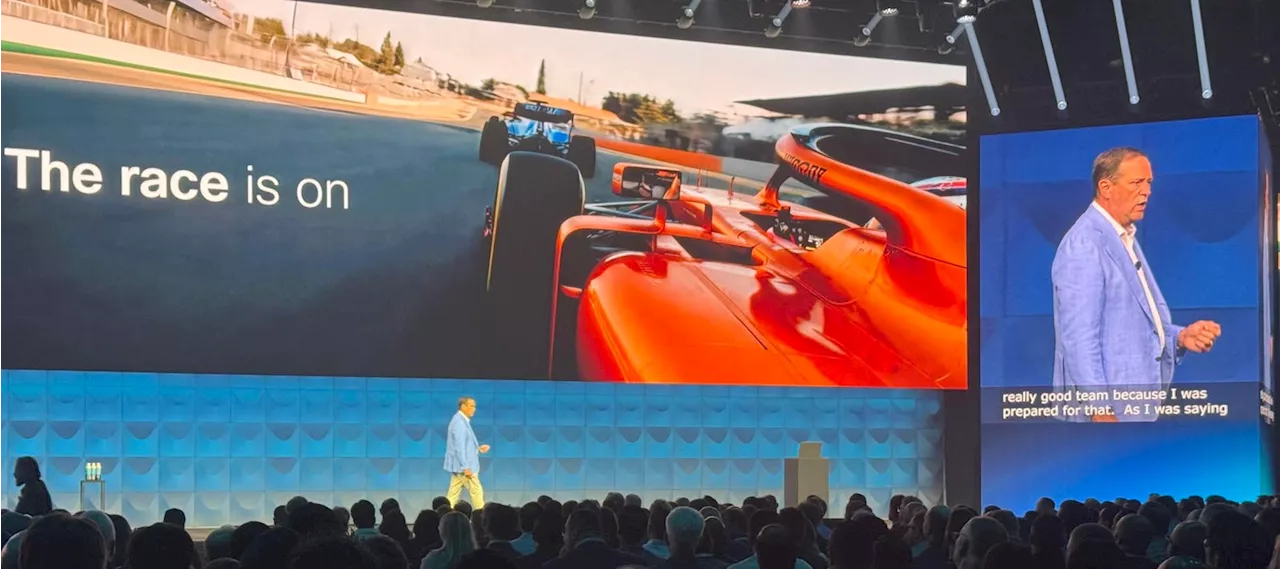 Cisco Charts Its Agentic AI Journey At Cisco Live U.S. 2025Cisco has quickly developed deep agentic AI integrations across its networking, security and observability products, along with a renewed focus on customer experience.
Read more »
 How luxury brands are deploying agentic AI to enhance customer experiencesThe term describes artificial intelligence systems capable of operating independently, making decisions and taking actions without direct human intervention.
Read more »
 Organizations Aren’t Ready for the Risks of Agentic AIEven the most up-to-date AI risk mitigation systems will buckle under the complexity of what’s coming next.
Read more »