Attorney: San Diego County Sheriff’s Department needs to change policy regarding the maximum restraint technique.
SAN DIEGO - Seven years, two trials, and an $85 million verdict after a jury sided with the family of Lucky Phounsy. Attorneys for the family say he died after being tased and restrained with his hands and feet bound behind his back by deputies at an East County home in 2015.
Now, Phounsy’s wife is calling for the San Diego County Sheriff’s Department to change its policy regarding the maximum restraint technique. “If we can change the policy and not have another family go through what we’ve been through and what we’re still going through, you know I think that’s one day something I can explain to my kids,” she shared.On April 13, 2015, Lucky Phousny and his family were celebrating his son's birthday at a relative’s house in the Santee area.“Phounsy had returned from three days at the Coachella Music Festival where he had used some drugs and had not slept for several days,” the filings said.In the recording obtained by ABC 10News, Phounsy told the 9-1-1 operator someone was trying to kill them. Later in the call, a family member told the 911 operator that Phounsy was paranoid, and they were trying to get him to the hospital. One person can be heard saying, “They’re coming Lucky. They’re coming, you called them, they’re coming."Things started to go badly when the Sheriff's deputies made a series of decisions that, in our view, escalated rather than de-escalated the encounter,” said family attorney Tim Scott. “What happened is that the Sheriff’s ended up tasing Mr. Phounsy even though he was unarmed, even though he was the one who called for help and after they tased him then it was a real fight. Then there were blows that were exchanged and there was a real melee,” Scott said. In court filings, attorneys for the Sheriff’s Department said deputies tried to calm Phounsy down and get handcuffs on him. The court documents claim, “Phounsy spun around suddenly and punched Deputy Collins several times in the face. Deputy Collins returned some punches and was able to push Phounsy away enough to deploy his Taser, but it had no effect.” In court documents, attorneys for the Sheriff’s Department say the fight continued until more deputies arrived at the house and Phounsy ended up on the ground."They put him prone on his stomach on the ground, continued to apply force to his back, critically, and then they put him into a configuration that can only be described as a hogtie,” Scott said. He explained Phounsy was eventually put in an ambulance, his hands and feet still bound together behind his back.“The county said they did nothing wrong, and they continue to take that position up until today in new trial motions that were filed,” Scott said.“I never thought I would lose my husband when I'm 33, let alone have kids without a father. He always promised he would be there for us, and it's been hard,” said Phounsy’s widow Loan Nguyen.Nguyen told ABC 10News reporter Adam Racusin that Phounsy courted her. “I’ve never been to Disneyland. I made a comment to him that the first person that takes me to Disneyland is the one for me. A few days after Christmas, in 1998 he took me to Disneyland.”“I always say he danced his way to me,” she said. “He got down on one knee and asked me to marry him.”"Lucky loved Kaden and Kira,” Nguyen said. “They were his light."But that doesn't mean they don't crave his love. "There's days when Kaden would ask me or tell me, ‘I wish daddy was here.’ How do you respond to that,” Nguyen said.Part of that is working to make sure the San Diego County Sheriff's Department changes its policy known as the"maximum restraint technique,” which is what the family says Phounsy was placed in before he died.According to the San Diego County Sheriff’s Department’s policy manual, “The ‘maximum restraint technique’ is used on violent subjects that are not controlled by other means. Application of maximum restraint entails the use of at least two Cordcuff / Ripp restraint devices. This application results in restricted movement of both the hands and feet.” In court documents, attorneys for the County of San Diego say the medical examiner found that injuries from the altercation with deputies and the restraint did not cause Phounsy's cardiac arrest and subsequent death. In that autopsy report, the medical examiner stated, “Based on these findings and the history and circumstances of the death as currently known, the cause of death is best listed as ‘anoxic encephalopathy, due to cardiopulmonary arrest with resuscitation following physical altercation and restraint, due stimulant drug-related psychotic state’ with ‘cardiac arteriolosclerosis’ listed as a contributing condition, and the manner of death as ‘accident.’”"It boils down to this when law enforcement binds a suspect's hands and feet behind their back and their upper and lower extremities are then drawn together behind their back so their hands and their feet are in some manner connected together that puts an enormous amount of pressure or strain on your respiratory system,” said family attorney Mark Fleming.It's an 18-minute recording the department says is still used today that runs through several examples of how to apply the maximum restraint technique. The video teaches deputies in a controlled environment how to apply the restraints and connect part of the body with the strap by running it from the waist across the front of the body. "In this configuration, it doesn't come close to the danger that Lucky was in or other people who end up dying are placed in, but what it does is it begins to create a dangerous situation,” Fleming said. Attorneys for the family say in Phounsy’s case the configuration was different than the training video. They say the cord was run behind Lucky's back. They claim his hands and feet were only separated by a few inches. "I think the video does a terrible job of explaining the risks of positional asphyxia, the risks of suffocation, the fact that this is a potentially deadly exercise that they're doing,” Fleming said. At least one deputy at the trial testified that there are variations to applying the maximum restraints. In transcripts from the trial, Deputy Jovonni Silva explained,"That connection point can either be behind the back or on the side. It's just imperative that both clasps are affixed together." In court documents, the Sheriff's Department explained that the use of maximum restraints is not at all the same as hogtying - which they don't allow.ABC 10News reporter Adam Racusin asked Attorney Tim Scott if he believed that if departments in San Diego County got rid of these types of techniques it would save lives. “Absolutely,” Scott said.The San Diego County Sheriff's Department argues maximum restraint is a commonly used technique throughout the state and beyond. Team 10 found some departments across the country have different language in their policies and some are moving away from uses of force that bind both hands and feet behind the back. In New York and Los Angeles, both police departments’ policies clearly state hands and feet shouldn't be bound together. In Aurora, Colorado, the police department policy states, “Members are strictly prohibited from securing restrained feet to, through or over the handcuffs or hands of the subject.” A spokesperson for that department told ABC 10News in part, “While the hobble is still authorized and safe to use, we identified a better solution in the WRAP.” It’s a restraint product that goes on the body and is designed to keep people in the upright seated position. The department explained they believe, “The use of this system allows for quick application and keeps the subject in an upright position, effectively preventing respiratory distress and death.” The San Diego Police Department has also moved to the WRAP. A department spokesperson told ABC 10News, “The maximum restraint technique is taught in the academy because it is a regional academy that all agencies in the county participate in. For SDPD, all officers and sergeants are certified in the use of the WRAP during their mandatory Crisis Response Team training. This is what SDPD exclusively uses in the field.”Use of force data obtained by ABC 10News shows it’s now used more often than the cord-cuff as a maximum restraint technique.In 2021, the National City Council approved a $300,00 settlement with the family of Earl McNeil. McNeil died in 2018 after being restrained by law enforcement outside the National City Police Department. McNeil was arrested and placed in the WRAP. Court documents say law enforcement also placed two spit hoods over his head. The autopsy reported listed the official cause of death as hypoxic-ischemic encephalopathy, due to resuscitated cardiorespiratory arrest. In other words, he died from brain damage sustained from a lack of oxygen because of a heart attack. McNeils family also filed a separate lawsuit against the manufacturer of the restrain. Court records show it’s been dismissed with prejudice, meaning they can’t refile the same lawsuit. No additional details were available. In court documents the company denied all allegations.ABC 10News asked the department if they’d consider adding language to their policy or changing it altogether. They told us they couldn’t comment due to pending litigation. They also won't talk about Lucky Phounsy or that $85 million verdict. In two separate court filings they’ve asked for it to be thrown out, reduced, or for a new trial.One of the filings argued, “The evidence at trial was not legally sufficient to support the verdict. In particular, there was no evidence of excessive force by Fischer. There was only unrebutted testimony of reasonable force in response to resistance. Even if there was such evidence, qualified immunity would attach. As the Ninth Circuit found just last week—in a 3-0 opinion addressing the use of maximum restraints, downward pressure to a suspect in the prone position, and use of a spit sock—there is “no clearly established law that would have put [the deputies] on notice that the force they used was excessive.” The other stating in part, “The $85,000,000 verdict was over 15 times the average verdict in comparable California cases, and the $80,000,000 for loss of Lucky Phounsy’s companionship was 30 times the average award for loss of companionship.”In court filings, Phounsy’s family and their attorneys have pushed back against the county’s arguments, writing in part, “None of Defendants’ arguments are persuasive, and the jury’s thoughtful verdict should stand.”Phounsy’s death is not something Nguyen wants to talk about. She hasn't told her kids exactly how their dad died. Nothing will ever make it OK, but she believes if policy changes, one day it might help her kids process. ABC 10News reporter Adam Racusin asked Nguyen if one day she’ll be able to talk to her kids about their father’s death. “I hope so,” she said. “You know right now my focus is just to protect them."
United States Latest News, United States Headlines
Similar News: You can also read news stories similar to this one that we have collected from other news sources.
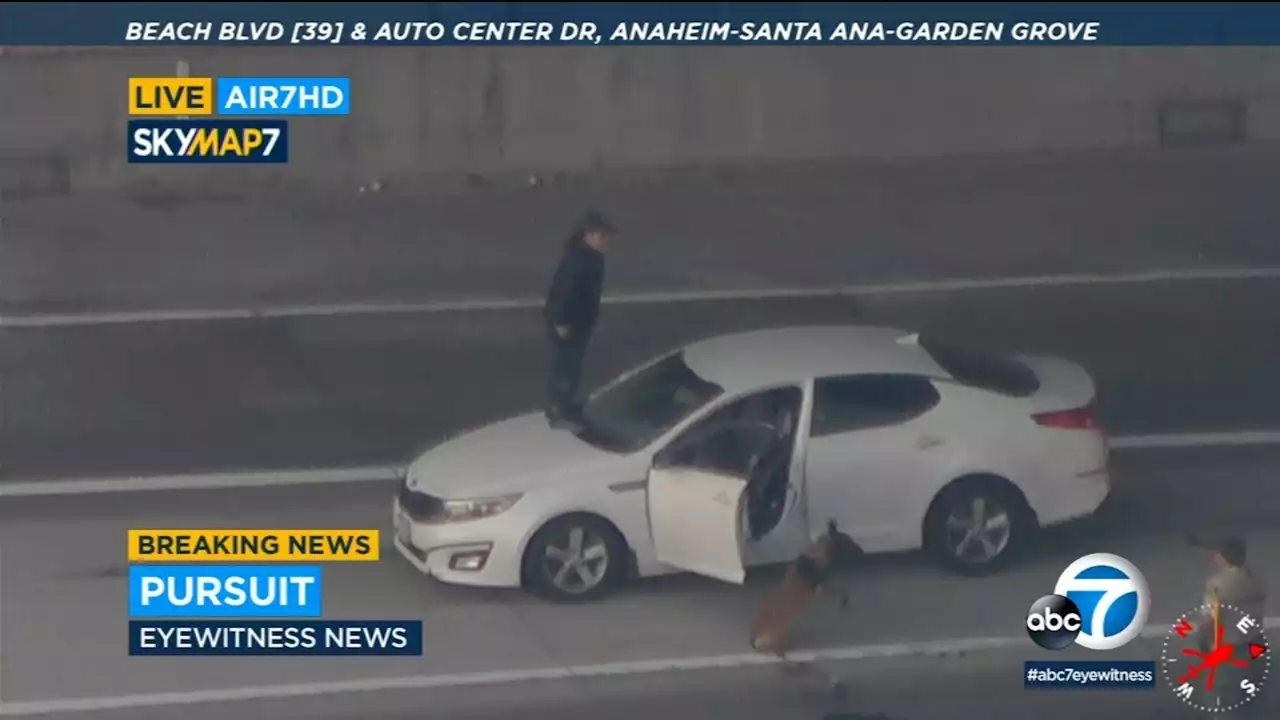
Chase from San Diego County ends in wild standoff on 5 Freeway in AnaheimA stolen-car suspect was arrested after leading authorities on a chase from San Diego County to Anaheim, where he surrendered after a standoff on the 5 Freeway Monday evening.
Read more »
San Diego County supervisors to weigh in on statewide abortion amendmentCalifornia’s state Supreme Court has a long history of upholding abortion rights, but supporters say the amendment would codify protection for reproductive rights. It would also have political implications this November.
Read more »
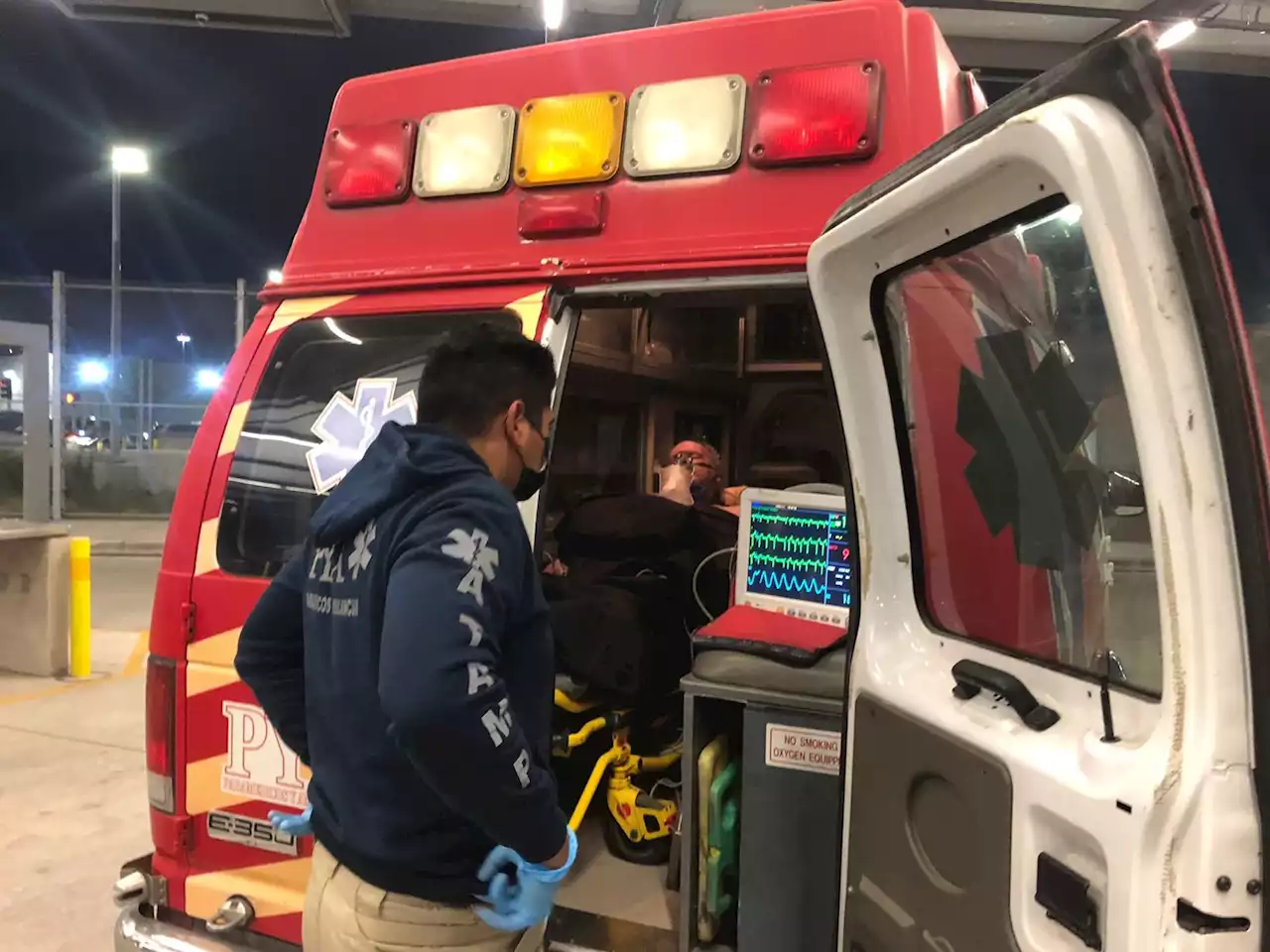
Meghan Markle's Dad Rushed to San Diego County Hospital for Medical EmergencyMarkle is the father of the duchess of Sussex, who is married to Prince Harry, and has lived in Baja California for several years.
Read more »
San Diego County expanding free menstrual product programSan Diego County is expanding its free menstrual products program to meet increased demand, a spokeswoman said Tuesday.
Read more »
KUSI.com | San Diego News | Weather | ASR | PPR | GMSD - KUSI News - San Diego, CAIn case you missed KUSI's Matt Prichard's 'Life Aboard the USS Nimitz: Part 1' you can check out the day to day life of a US Navy Soldier and what it's like preparing for deployment on the USS Nimitz here on
Read more »

San Diego County records 10th jail death this yearUnidentified 64-year-old man is the latest to die in Sheriff's Department custody
Read more »