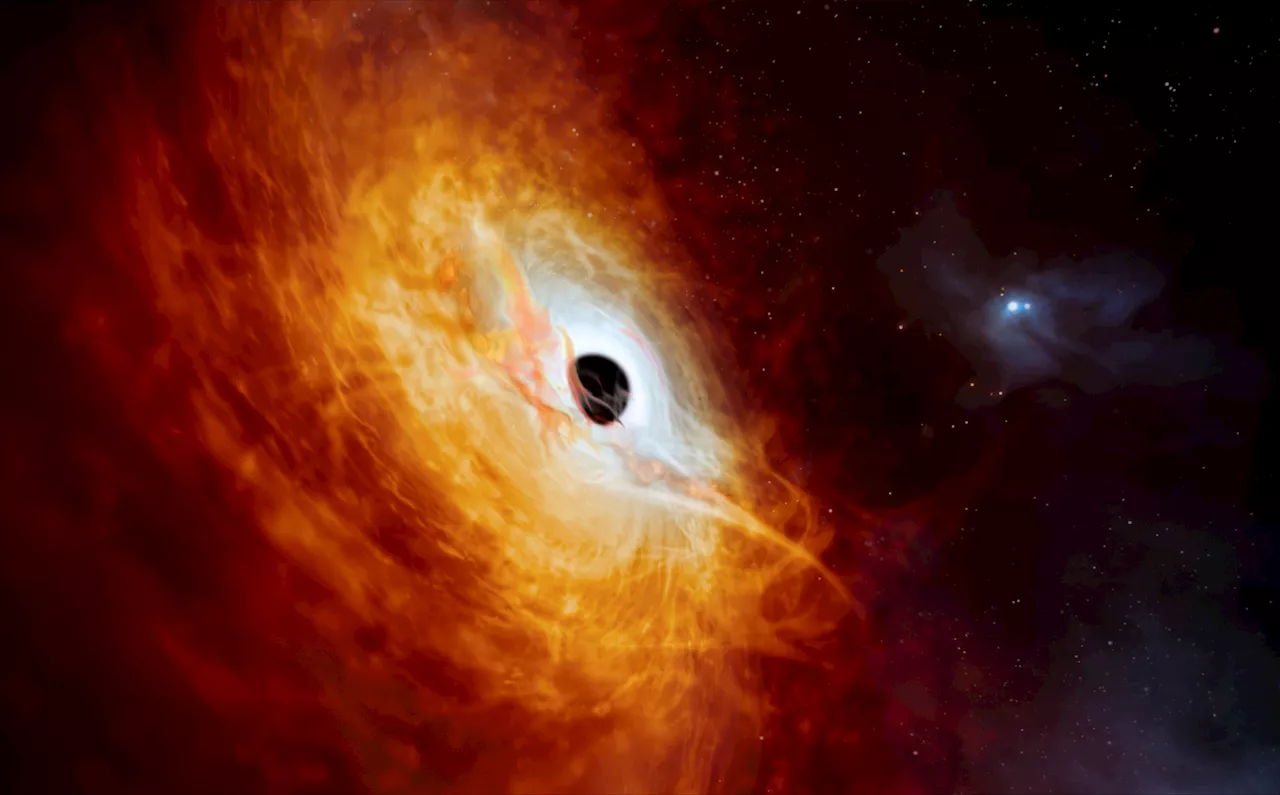
Astronomers have found a record-breaking quasar with a black hole at its heart growing so fast that it swallows the equivalent of a sun a day.
The black hole the distant quasar is more than 17 billion times more immense and 500 trillion times brighter than our sun.The record-breaking quasar shines 500 trillion times brighter than our sun. The black hole powering this distant quasar is more than 17 billion times more immense than our sun, an Australian-led team reported Monday in the journal Nature Astronomy.
“The exciting thing about this quasar is that it was hiding in plain sight and was misclassified as a star previously,” Yale University's Priyamvada Natarajan, who was not involved in the study, said in an email.More than 29,000 Palestinians have been killed in Israel-Hamas war, Gaza Health Ministry says
United States Latest News, United States Headlines
Similar News:You can also read news stories similar to this one that we have collected from other news sources.
 Astronomers See 18 Examples of Stars Getting Torn Apart by Black HolesSpace and astronomy news
Read more »
 Astronomers find monster black hole devouring a sun's-worth of matter every dayBen Turner is a U.K. based staff writer at Live Science. He covers physics and astronomy, among other topics like tech and climate change. He graduated from University College London with a degree in particle physics before training as a journalist.
Read more »
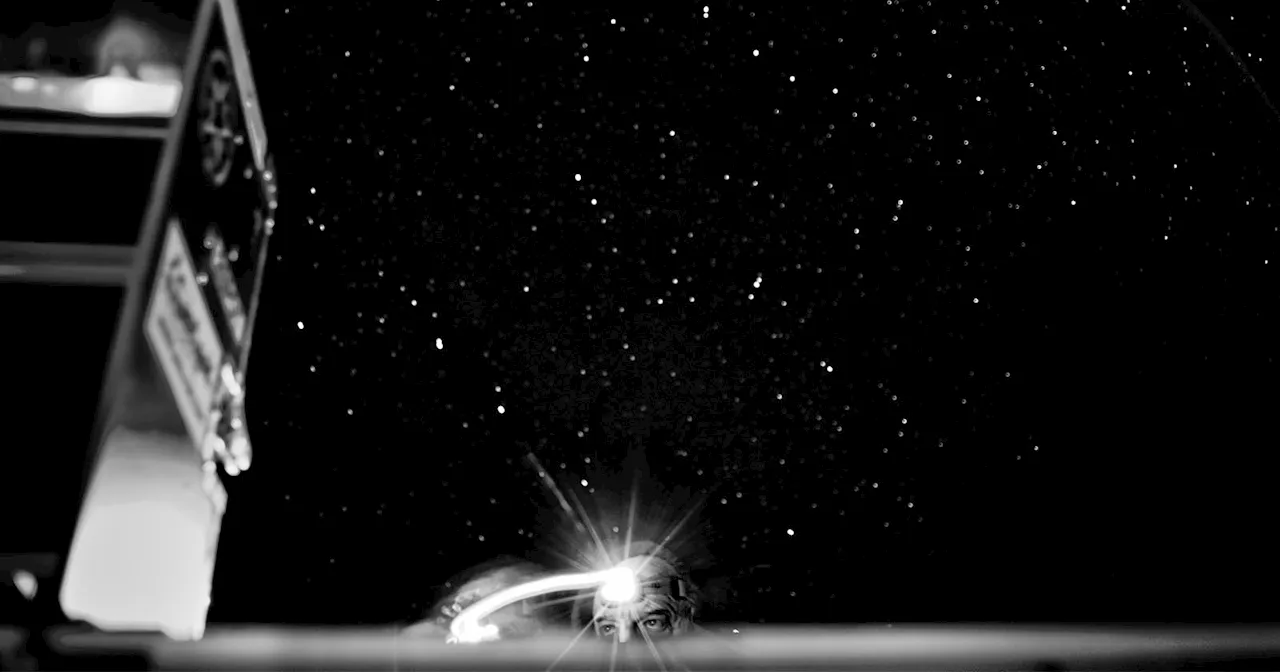 Photographer Turns the Lens on Amateur Astronomers Who Contribute to ScienceA photographer spent five years traveling the world to turn the lens on amateur astronomers who have contributed to science.
Read more »
 Astronomers discover massive protocluster around luminous quasarAstronomers from the Steward Observatory in Tucson, Arizona and elsewhere report the detection of a new massive protocluster. The structure was found around a luminous quasar known as J0910–0414. The discovery was detailed in a paper published February 2 on the pre-print server arXiv.
Read more »
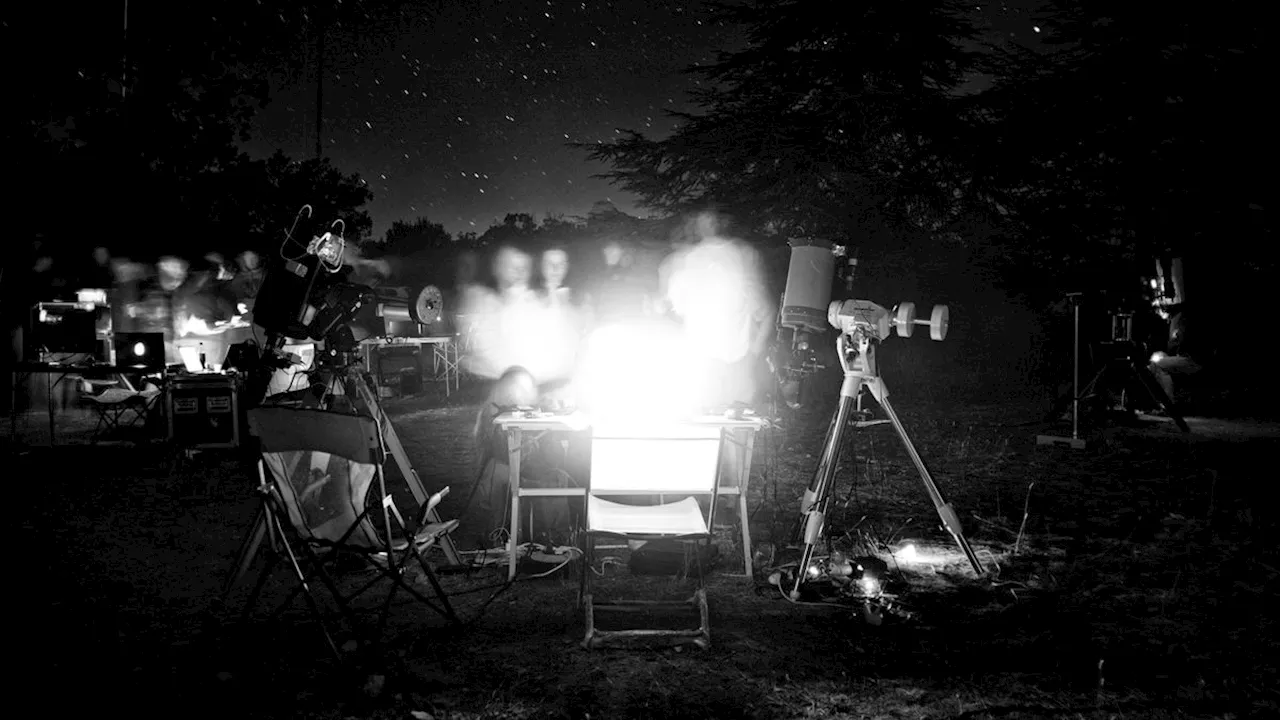 Amateur astronomers can make breathtaking discoveries. This new photobook on Kickstarter shows howJeff Spry is an award-winning screenwriter and veteran freelance journalist covering TV, movies, video games, books, and comics. His work has appeared at SYFY Wire, Inverse, Collider, Bleeding Cool and elsewhere.
Read more »