
Research on the International Space Station is helping astronauts to prevent loss of bone and muscle tissue by using an exercise regimen.
Future missions to the Moon and Mars must address many challenges, including preventing loss of bone and muscle tissue in astronauts. Research on the International Space Station is helping to address this challenge.
Without Earth’s gravity, both bone and muscle atrophy, or become smaller and weaker. Early on, scientists realized that exercise is a critical part of maintaining healthy bones and muscles in space, just as it is on Earth. From simple elastic bands on early missions, exercise hardware has become increasingly advanced. Current equipment includes the Advanced Resistive Exercise Device cycling machine. Studies continue to refine this equipment as well as the intensity and duration of how astronauts use it, with crew members now averaging two hours of exercise per day.NASA astronauts Bob Hines and Kjell Lindgren work out on the Advanced Resistive Exercise Device .Installed in 2008, ARED uses a piston and flywheel system to provide loading that essentially mimics weightlifting in weightlessness. A current investigation from ESA ,analyzes the effect of this type of exercise on the body in microgravity to help determine optimal workout programs before, during, and after spaceflight. Results have shown that preflight exercise training improves an individual’s performance while on the space station just as pre-season training helps athletes in later competition.), which could be configured for at least 18 different exercises using both upper and lower body muscles with up to 300 pounds of resistive force. A retrospective evaluation showed some correlation between preflight strength and postflight changes, and analysis suggested that a resistance device that provides higher loads and improved exercise prescriptions could provide greater benefits.JAXA astronaut Satoshi Furukawa pedals on the upgraded CEVIS system.CEVIS, installed in 2001 and upgraded in 2023, uses friction and resistance and is computer-controlled to maintain an accurate workload. The system displays parameters such as cycling speed, heart rate, elapsed time, and exercise prescription details. A study using the data collected by CEVIS concluded that up to 17% of astronauts could experience loss of muscle performance, bone health, and cardiorespiratory fitness if future missions continue to use current exercise countermeasures. The researchers note that this highlights the need to further refine current regimens, add other interventions, or enhance conditioning preflight.Appropriate equipment is important, but so is the way it is used. Early exercise regimens included running on a treadmill at low velocity and conducting resistance exercise at low loads for long periods of time. Despite spending up to 10 hours per week exercising, astronauts continued to lose muscle mass and bone density. Growing evidence showed that high-intensity, low-volume exercise was more effective at maintaining fitness on Earth. The Integrated Resistance and Aerobic Training Study compared results of low-intensity, high-volume with high-intensity, low-volume workouts in microgravity. The outcomes were similar, but shorter workouts save crew time – a valuable resource on missions – and reduce wear and tear on exercise equipment.Future missions may be limited to a single device for both aerobic and resistance exercise, necessitating shorter workouts so each crew member gets a turn. Higher intensity exercise could compensate for these limits.An investigation calleddocumented changes in maximum oxygen uptake, which is considered a standard measure of a person’s aerobic and physical working capacity. Long-duration spaceflight caused a significant decrease in maximal oxygen uptake and aerobic exercise capacity.These results have important implications for future long-duration space missions, adding to the evidence that current countermeasures may not be adequate.ESA/NASA, an investigation from ESA , analyzed molecular changes in skeletal muscle before and after spaceflight and identified an enzyme product that could be used as a possible indicator of muscle health. The findings suggest that current exercise protocols are effective in preventing muscle deconditioning and support improvements in countermeasures to protect crew health and performance on future deep space exploration missions.While current exercise programs appear to moderate changes in musculoskeletal systems, individual results vary. In addition, current regimens likely cannot directly transfer to longer exploration missions due to space constraints, environmental issues such as removal of heat and moisture, device maintenance and repair needs, and the challenges of finding time for exercise and avoiding interference with the work of other crew members.Planned missions to explore the Moon and deep space may last up to three years. Research continues to zero in on the combination of diet, exercise, and medication that could keep astronauts healthy during spaceflight, when they set foot on the Moon or Mars, and when they return to Earth. Because aging, sedentary lifestyles, and illnesses cause bone and muscle loss on Earth, this research also can benefit people on the ground.NASA’s Johnson Space CenterLambrecht G, Petersen N, Weerts G, Pruett CJ, Evetts SN, et al. The role of physiotherapy in the European Space Agency strategy for preparation and reconditioning of astronauts before and after long duration space flight. Musculoskeletal Science & Practice. 2017 January; 27 Suppl 1S15-S22. DOI:English KL, Lee SM, Loehr JA, Ploutz-Snyder RJ, Ploutz-Snyder LL. Isokinetic strength changes following long-duration spaceflight on the ISS. Aerospace Medicine and Human Performance. 2015 December 1; 86: 68-77. DOI:Scott JM, Feiveson AH, English KL, Spector ER, Sibonga JD, et al. Effects of exercise countermeasures on multisystem function in long duration spaceflight astronauts. npj Microgravity. 2023 February 3; 9: 11. DOI:English KL, Downs ME, Goetchius EL, Buxton RE, Ryder JW, et al. High intensity training during spaceflight: results from the NASA Sprint Study. npj Microgravity. 2020 August 18; 6: 21. DOI: Ade CJ, Broxterman RM, Moore Jr. AD, Barstow TJ. Decreases in maximal oxygen uptake following long-duration spaceflight: Role of convective and diffusive O2 transport mechanisms. Journal of Applied Physiology. 2017 April; 122: 968-975. DOI:Blottner D, Moriggi M, Trautmann G, Furlan S, Block K, et al. Nitrosative Stress in Astronaut Skeletal Muscle in Spaceflight. Antioxidants. 2024 April; 13: 432. DOI: Scott JP, Weber T, Green DA. Introduction to the Frontiers Research Topic: Optimisation of Exercise Countermeasures for Human Space Flight – Lessons from Terrestrial Physiology and Operational Considerations. Frontiers in Physiology. 2019 10173. DOI:
Human Health And Performance Humans In Space International Space Station (ISS) ISS Research
United States Latest News, United States Headlines
Similar News:You can also read news stories similar to this one that we have collected from other news sources.
 Research provides details on how exercise can improve depression symptoms.New research provides details on which forms of exercise are most effective for depression.
Read more »
 Experts propose ‘lunar Wall of Death’ run for astronaut exerciseRunning for a short duration around the wall generated enough lateral force to counteract muscle and bone wasting in lunar environment.
Read more »
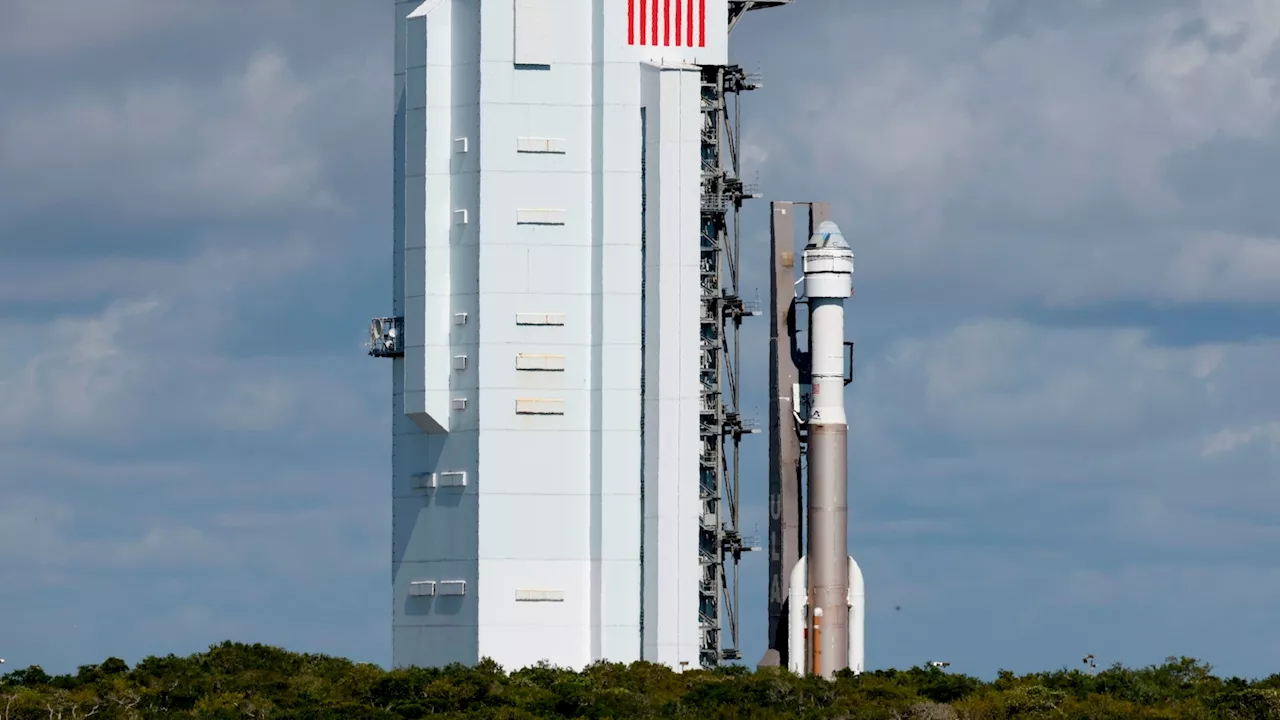 Boeing's Starliner capsule set for first astronaut-crewed flight to International Space StationThe Starliner capsule is preparing to launch from Florida at 10:34 p.m. ET.
Read more »
 Research Associate (part-time) / Ph.D. candidate in Surface Science - Bonn, Nordrhein-Westfalen (DE) job with Rheinische Friedrich-Wilhelms-UniversitätThe University of Bonn is an international research university with a wide education and research profile.
Read more »
 Astronaut born in Wheat Ridge reflects on spending time in space aboard the International Space StationWanya Reese joined the Denver 7 team as a Weekend Morning Anchor and Reporter in July of 2023.
Read more »
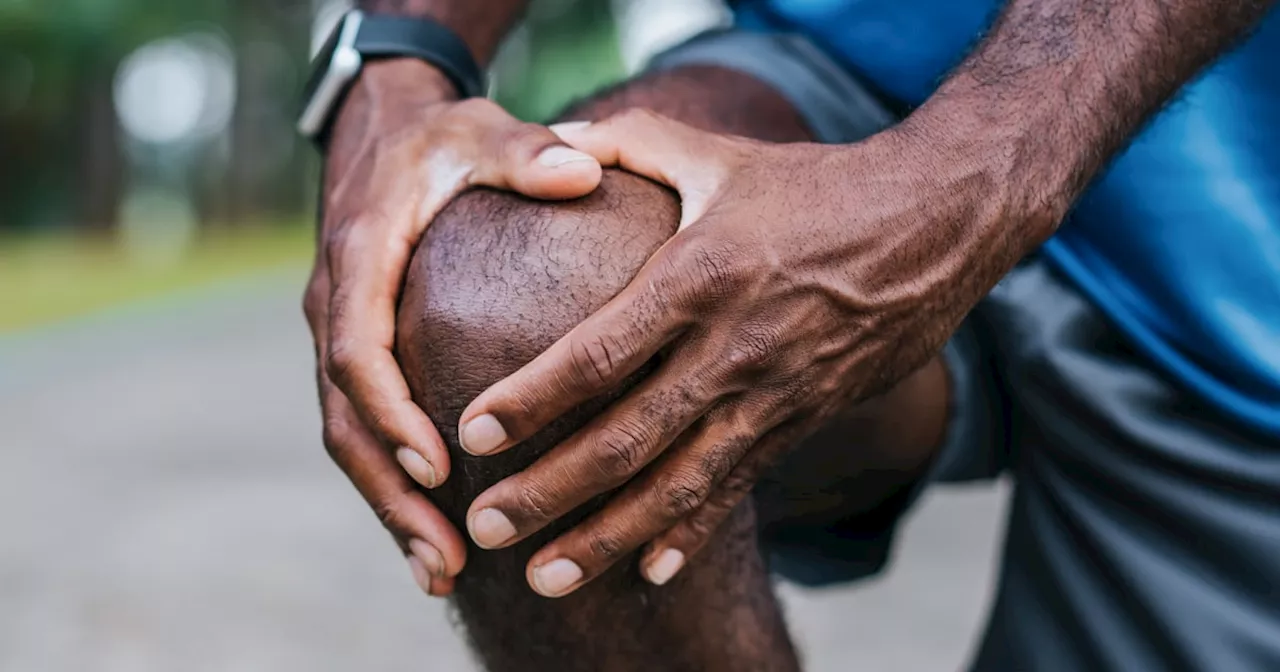 This is the best exercise to prevent knee pain and arthritis, based on new researchLinda Carroll is a regular health contributor to NBC News. She is coauthor of 'The Concussion Crisis: Anatomy of a Silent Epidemic' and 'Out of the Clouds: The Unlikely Horseman and the Unwanted Colt Who Conquered the Sport of Kings.'
Read more »