
Simple external cues, such as lines on the floor, can help Parkinson’s patients focus their efforts and overcome the difficulty of the symptoms. With augmented reality, those cues can be anywhere.
The physiotherapist told Finn about cue markers—colored lines laid on the floor that can help Parkinson’s patients overcome difficulty walking. Finn was unconvinced. He couldn’t see how some lines on the floor would help his father.
But when they got home, he laid some colored exercise bands down in the kitchen and watched in amazement as his dad easily marched back and forth across them. The technique, called external cueing, works by using visual, auditory, or tactile prompts—colored tape on the ground, playing a metronome, or physical vibrations—to engage neural pathways not affected by the disease. “It can help people focus their attention and help them take that first step and overcome the freeze,” says Claire Bale, associate director of research at Parkinson’s UK, a research and support charity in the UK. While Finn—who worked in marketing and video production in London—was struck by the effectiveness of this simple intervention, he thought it too basic to actually be helpful. But augmented reality glasses from the likes of Magic Leap had just started coming to market, and he wondered whether they might be able to project virtual lines onto the ground to act as cues. He founded a startup, Strolll, to try to make that vision a reality. Two years later, Strolll had no staff and about £50 in the bank, according to Jorgen Ellis. Ellis, a New Zealander with a background in furniture startups, had come to the UK looking for his next venture and wanted to get involved with something he felt passionate about. His grandfather had lived with Parkinson’s for over a decade, and when he met Finn through a mutual contact, he immediately saw the promise of the technology. He came onboard as CEO and started by trying to demonstrate that AR-based cueing was scientifically valid. Ellis and Finn soon found a group of academics at VU University in Amsterdam, led by Melvyn Roerdink, who were working on something similar. Strolll acquired their intellectual property, and with Roerdink on board as chief innovation officer they began to develop and test the technology, now called Reality DTx. Instead of physical bands like Finn used, Strolll’s AR software simulates colored lines on the floor in front of the wearer, with each line disappearing as they clear it. A clinical trial confirmed the cueing technology was feasible and found promising outcomes. It could also help with rehabilitation exercises amid a shortage of physiotherapists: The software includes AR games like whack-a-mole and basketball, but designed around functional movements that help people with Parkinson’s. Mark Ross—who was diagnosed with Parkinson’s eight years ago at the age of 36 and is now Strolll’s head of brand and creative strategy—says these games can help overcome the apathy and depression that’s also a symptom of the disease. “You might know that you’ve got to exercise … but that’s not going to help you get off your chair,” he says. So the fact that it’s gamified makes doing the exercises much more alluring. The Magic Leap headset the software runs on costs around £3,000 , and Strolll charges upwards of £300 a month for its services—but Ellis argues this is more cost-effective than 30 half-hour sessions of in-person physical therapy. Ultimately, the company’s goal is to be the “most used rehabilitation software in the world,” says Ellis. They even have a specific timeline in mind: 7 million minutes of rehab with the Strolll device in a week by New Year’s Eve 2029. By then, Ellis hopes Strolll could be in use for all kinds of neurological conditions, from stroke to multiple sclerosis. There is, he says, an “almost unlimited opportunity.” This article appears in the January/February 2025 issue of WIRED UK magazine.
Wired Uk Health Augmented Reality Healthcare
Trending
 A gorgeous April afternoon in store across the Denver metro area
  ‘Artemis Mission Cannot Lead To Interplanetary Wild West,’ Astronomer Warns
  Trump says US forces will ‘finish the job’ soon in first prime-time speech since starting Iran war
  Former Wisconsin football player, who left the sport amid mental health struggles, dead at 24
  Drew McIntyre Gives Honest Take About His Recent WWE Title Reign
  U.S. Sen. Bernie Sanders introduces bill that could keep the Padres in San Diego
 United States Latest News, United States Headlines
Similar News:You can also read news stories similar to this one that we have collected from other news sources.
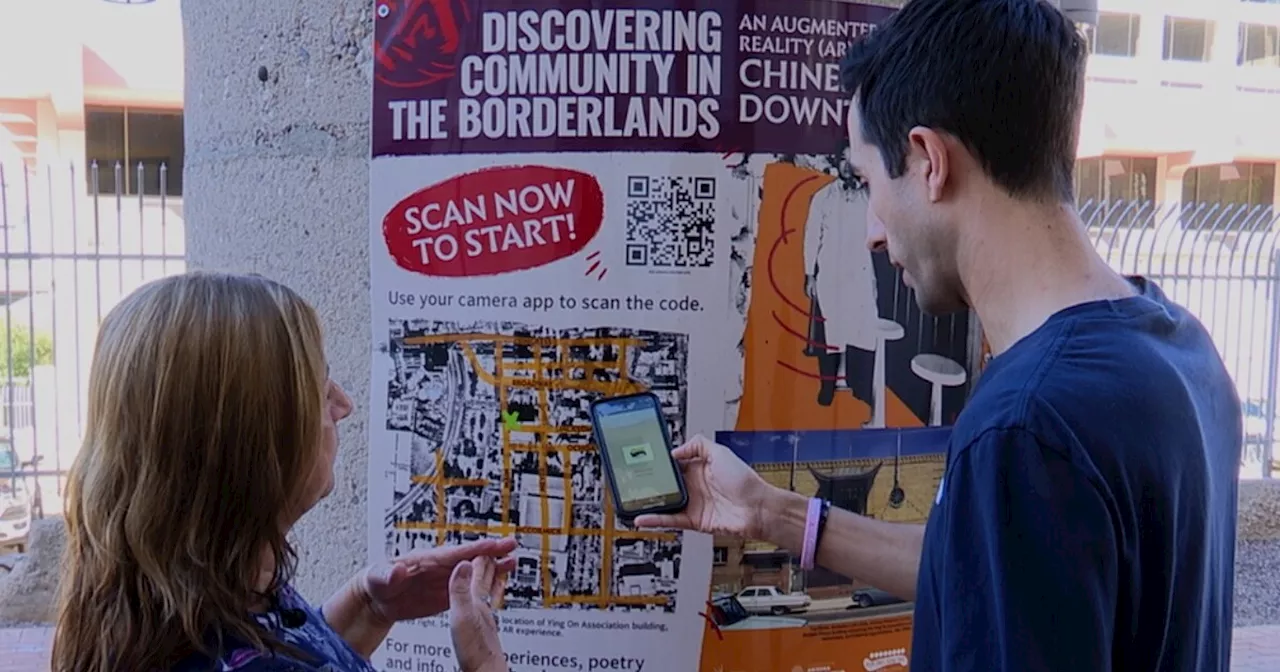 Augmented reality brings downtown Tucson's Chinese history to life in the 21st centuryJoin José every Monday through Friday as you start your day with Good Morning Tucson!
Read more »
 Kids are helping revitalize East Palo Alto, one arty electrical box at a timeK-12 students are bringing original animations, illustrations and music to life through augmented reality.
Read more »
 Reality check: Making indoor smartphone-based augmented reality workTo understand the practical challenges of indoor augmented reality applications on smartphones, researchers conducted 113 hours of extensive experiments and case studies over 316 patterns to determine the factors that degrade localization accuracy in real-world indoor environments. Landmarks for vision systems, LiDAR, and the IMU were evaluated.
Read more »
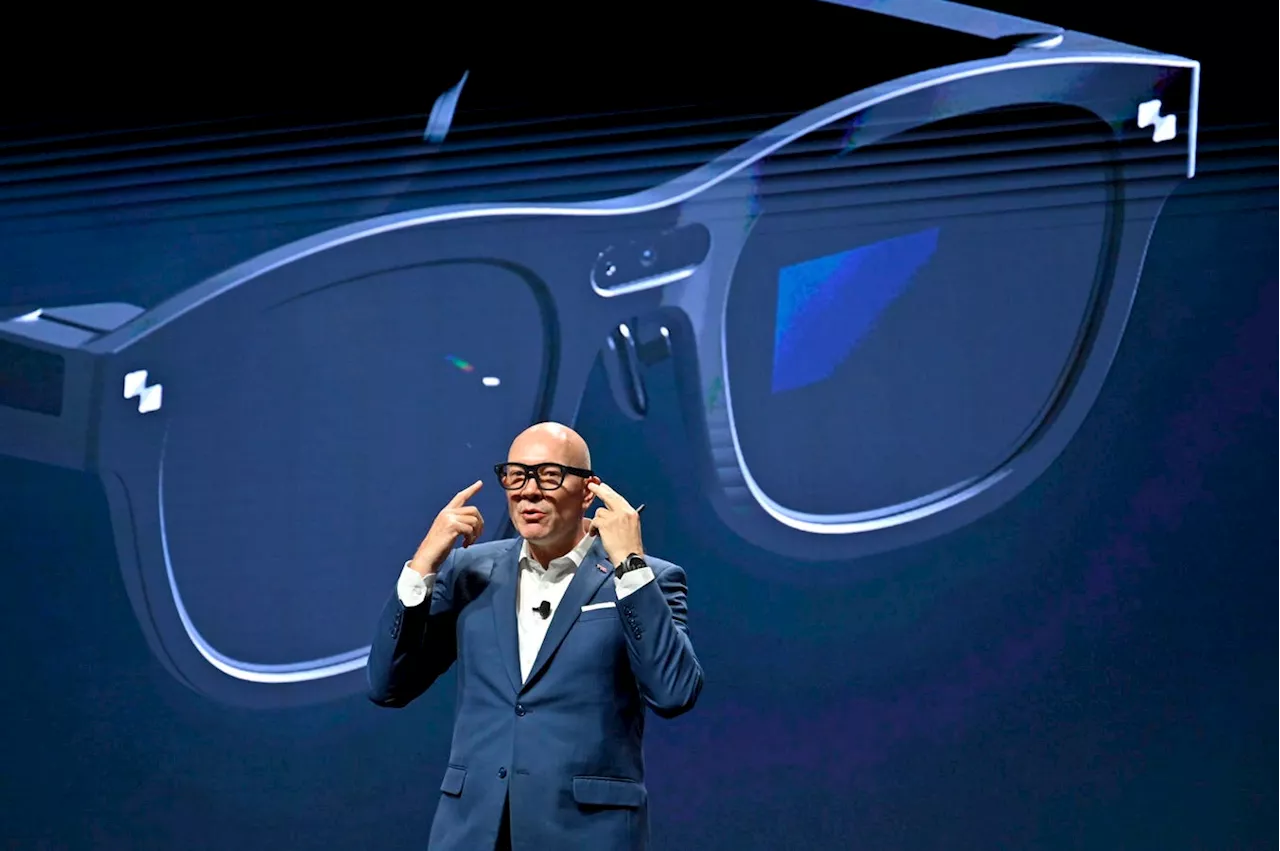 Are Augmented Reality Glasses The Future Of Workplace Productivity?Anisha Sircar is a journalist with experience working at Reuters, Bloomberg, Quartz and Scroll.in. She holds a master’s degree from Columbia University and is currently co-authoring a book on personal finance and the macroeconomy.
Read more »
 Alibaba-backed Xreal launches augmented reality glasses with new chip as Meta rivalry heats upXreal is betting on glasses, rather than headsets like Apple’s Vision Pro or the Meta Quest, to be the mass-market winners in augmented reality.
Read more »
 3-Year Medical School Catching on Across the United StatesAccelerated MD program students are better prepared for residency and future careers, said program leaders.
Read more »