
“Driving through this densely wooded land parched by drought, it’s impossible not to think about it burning,” Dave Eggers writes. “In California, everywhere we go, we look for risk.”
Calistoga is an amiable town of five thousand or so, and today it’s as lively as any Sunday during the pandemic. The smoke from the fire, only two miles south, is travelling southwest, so here in Calistoga the skies are blue and the town is bustling.
People sit and eat outdoors at outdoor cafés. It’s hard to say how people in other parts of the country or the world would react to a fire so close and now burning a thousand acres, but Californians are calm. Maybe we’re hardened, or shell-shocked. Maybe we have such deep faith in our firefighters that we don’t panic until they tell us to. Meanwhile, though, we pay close attention to which way the winds are blowing. Right now, from Calistoga, the winds are blowing the other way, so brunch is served.I drive south of Calistoga on Route 29, and in minutes the fire becomes visible. It looks like an active volcano. An enormous plume of gray-white smoke billows from Glass Mountain’s wooded peak. I pull onto the gravel shoulder. The fire is across the road and beyond the valley floor, less than a mile from the road. All along the road, people have pulled over and are watching the fire like they’d watch aI call KC. I’m two miles north of her house, and the smoke is blowing her way. She’s at home, her neighborhood is socked in with white smoke overhead, but otherwise she’s unworried. “I just heard from a friend,” she says. “She woke up at three-thirty this morning and she felt a strange hot wind. So she got up, but figured it was nothing and went back to bed. Half an hour later, she woke up again. She looked out her window and the sun was coming up already. She looked at the clock and it said four. She woke up her husband and called 911. It was a big orange ball of fire coming over the hillside.” This is a familiar story. The fire always comes from behind a hill or treeline. Always it resembles a sunrise.I park near the Sterling winery just as a black helicopter swoops down. Extending a hundred feet below, hung from a wire, is what looks like a red balloon. The helicopter drops the red balloon lower and lower, until it disappears into the vineyard. Then, seconds later, the red balloon reappears, dripping water as the helicopter rises. There is an irrigation ditch in the winery—not visible from the road—and from it the helicopter has just filled its bucket. The bucket seems enormous from where I’m watching, holding thousands of gallons, but, as the helicopter rises and flies toward the fire, the helicopter gets smaller and smaller—impossibly small—until it’s no bigger than a dragonfly, its bucket like a tiny red thimble. When it drops its water on the fire, a brief white spray quickly disappears, like sugar sprinkled from a teaspoon. Every few minutes, one of five helicopters comes to the ditch. There are fixed-wing scouting and firefighting planes in the sky, too, at least ten of them, including the locally beloved—Very Large Air Tanker. And, every ten minutes, the same black helicopter that started the cycle comes back to the irrigation ditch, fills its thimble-basket, and heads back to the volcano.In downtown St. Helena, all is calm. Tourists window-shop among the galleries and home-furnishing shops on Main Street, and the lunch crowd is dense outside a small restaurant called Himalayan Sherpa Kitchen. At KC and Tom’s house, a few blocks away, we sit in their back yard, under the dappled shade of their hundred-year-old sycamore. They bring out their new puppy, which looks like a tiny caramel-colored stuffed animal with black-button eyes. I ask Tom if this new fire changes his plans for the rest of his harvest. “That’s a very fair question,” he says. He has three vineyards that haven’t been picked yet, but they’re either farther north or farther south. “At this point, I don’t know if it’s a state of shock or just disbelief. Right now, I’m just”—he closes his eyes—”being here.” Their middle son, Charlie, who’s thirteen and tall for his age, shows me a scooter that he’s modified. He’s removed its wheels and duct-taped the bottom, so he can ride it on their trampoline. He gets inside the enclosed trampoline and shows me a backflip.are.’ ” The distinction is always important. Every time there’s a fire, Californians get worried texts from elsewhere in the country and world.. Generally speaking, the fires are always somewhere else. When they get closer, the warnings are usually incremental. Red Flag Day is first. Then Evacuation Warning. Then Mandatory Evacuation. “As long as they can keep it from jumping Silverado Trail,” Tom says, referring to a road which acts as a key line of defense to the east. KC opens an app on her phone, showing the movement of the fire. “It’s there,” she says, pointing to Deer Park. “They’re evacuating farther north, so I think it’s going north.” Through the boughs of their oak we see a 747 firefighting plane, orange and white, flying south to refuel. There are so many sirens in the distance that they bleed together into a kind of delirious dial tone, while inexplicably the sky above us is now blue.I’m on Dunaweal Lane, on the north end of the Sterling winery, about eight miles north of KC and Tom’s house, watching the fire inch up the mountain. The wind is still blowing the fire southeast, and yet the fire is creeping upward, in the opposite direction. I remember something Mike Carlson had said when we met: “Fires want to go uphill.” The flames are enormous now, bright-yellow blooms amid the pink-and-purple smoke. After a day of relentless firefighting on the ground and from the air, the fire is only growing. On the radio they say that it’s now two thousand acres, but from here it looks far bigger than that.A few minutes later I get a text. “It’s been hell,” he writes.Watching the fire from the north, it’s tempting to think that it’s under control. The planes are still swarming, and the fire’s progress, from here, seems slow. In a corkscrew of purple smoke there is a flickering light, no bigger than a pinhole. I realize that it’s the headlight of a helicopter—just a tiny white dot in a thousand-foot spire. But, as the evening comes on, the flames pulse brighter in the dimming sky. A three-quarter moon is visible to the south, the pink smoke giving it the look of a copper penny. Then an arm of black smoke arrives from the direction of the fire, its long fingers reaching, grabbing, until the moon is gone. Across the street from me, a couple sits in a blue pickup truck, watching the hills burn. A woman’s legs extend from the passenger-side window.I drive into town again and realize the view from the north has been a lie. Now all is chaos. The sky is black, the fire’s crossed Silverado Trail, and it’s threatening the valley floor. The flames are no more than a thousand feet from the road, but still there are cars everywhere on Route 29, pulled over, pulling over. Teen-agers are walking along the road, holding hands and taking pictures. A man parks his Tesla and gets out, wearing Dockers and a golf shirt. He films the flames for a few minutes and then drives off. Fire engines weave between the traffic, sirens on, honking manically. The scene is ludicrous. The fire is far brighter, a neon orange in the suddenly black sky. When it burns hotter, the fire pulses, for a moment at least, into an otherworldly fuchsia. The skeletons of trees, whole forests, are clearly visible, backlit by orange. The fire is mostly silent from here, but occasionally there is a crackling sound when the trunk of a great pine breaks. This is followed by the thundering sound of the tree landing on the forest floor. I take a few pictures. “Excuse me,” a voice says. It’s a man of about forty, who’s been standing, watching the fires near me. “If I gave you my card, would you send me some of those photos? I think that might be my winery burning.” Justin Hunnicutt Stephens, his card says. I know his winery. It’s no more than two thousand feet from where we’re standing, and, whether or not it’s burning now, it’s directly in the line of fire.I’m standing in front of the AXR winery, just a bit north on Route 29. There are two young men filming the fires in front of me. The air is calm, and that’s good. A week ago, I met a firefighter named Bobby Payne who said that an ember can travel two miles, could land on a rooftop, in a gutter clogged with dry leaves, and ignite. High winds propelled the Tubbs Fire, which killed twenty-two people, in 2017. With no wind, fires burn slowly, creeping along, and firefighters can make progress on the land and from the air. With wind, though, the speed and unpredictability of a fire increase exponentially. Neighborhoods can ignite in minutes. I’m talking into a tape recorder, and I say these words: “The one thing is that there’s not a lot of wind right now.” Ten minutes later, I look up at a line of cypresses just across 29 and watch as their uppermost tips begin to sway.The AXR winery backs onto a heavily forested area on the west side of 29, and all day the thousands of people who have stopped to watch the fire have been doing so from the west, facing east. We have watched as we would a movie, facing one direction, never thinking that anything might happen behind us. One of the young men who’s been filming turns. I follow his eyes and see, behind the treeline at our backs, a red sunrise. The fire is now on both sides of 29. And if it’s on the western side, it can quickly drop into St. Helena proper. I text KC. I tell her that the fire jumped 29. She and Tom and the boys are in Santa Rosa, having dinner with Tom’s parents. I drive to her neighborhood, where all is quiet at first. I go west on Madrona Avenue and look south, across a wide vineyard and into the wooded hills beyond. The red sunrise I’d seen from 29 is clearly visible now, about half a mile away. There’s a second fire, too. They’re no more than a few acres each, and about a quarter mile from each other. Neighbors have started to emerge, looking up at the hills glowing pink. A man stands in the street, wearing a robe and slippers and watching the fires with his hands at his sides. Another man is walking two giant poodles. On KC’s street, people are packing, throwing trash bags of clothes and belongings into the blue glow of their S.U.V. trunks. The flash of a police car appears, then a dissonant siren sounds. “Please evacuate now,” the voice on the loudspeaker says. “This is a mandatory evacuation order. Please leave now.”In front of KC’s house, I stand on the roof of my car to get a better look into the hills. Now the first two fires have seeded a few smaller spots. Fountains of yellow fire shoot upward from a home site to the west. A bit east, a pulsing pink light is visible from behind a tree-lined ridge, like a candle flickering behind a black curtain. A neighbor across the street seems skeptical about the evacuation. “Is it mandatory?” he asks. A woman pulls a wheeled suitcase to her car and hugs a neighbor. The lights of a police car take over the block and stop in front of the woman and her suitcase. I assume that he’s about to scold them for not leaving, but instead he says, “What’s up, Buttercup?” Old friends, they catch up while KC and Tom’s next-door neighbor Joe Galambos turns on his hose and begins to water his roof. The water slaps and hisses.KC and Tom arrive. Charlie jumps out and is soon on his scooter, crisscrossing the darkened street, sharing information with the remaining neighbors.guys going?”“O.K., bye,” Charlie says. He looks at his house. KC and Tom are inside, beginning to pack. “This is sad,” he says. The Garretts will be turning around and going back to Tom’s parents’ place in Oakville. They have two cars. What to bring? The night is black and the air is acrid, and inside KC and Tom are both methodical and occasionally flummoxed. They know about evacuations, about having a “go bag,” but they’ve never had to evacuate before. And, because the fire is close but not yet bearing down on them, it presents a conundrum: spend an hour packing everything they can, or get the essentials and go? They hustle in and out of the house, grabbing clothes and heirlooms. KC packs a cooler of drinks and food. Then KC and I face the wall of photo albums. They have so many—at least seventy. We fill the backseat of one of their cars. Another batch fills another seat. We face the wall again. There are still forty or so left.But we have time, so I bring the rest to my car. Immediately after stacking them high in the backseat, the mountain crumbles, and programs and receipts from their wedding-planning days scatter on the car’s floor. Meanwhile, Charlie’s mood has changed. He’s chipper now, having realized that school will be cancelled tomorrow.Galambos is gone now—he was gone in minutes—and Charlie says that he usually lets him climb his roof. Charlie leads me to the back yard, where an aluminum ladder is set against the gutters. I follow him and feel the wet, sandpapery shingles. Tom joins us, and we see that the fire has grown again, doubled in size, the sky blooming rose-red. Tom and Charlie and I stare in silence for a minute. Now we see tiny lights in the black hills, engines making their way up to the fires. In the coming days, the Glass Fire will grow to sixty-five thousand acres—more than half of it seeded by these starts west of Route 29—before Cal Fire will get it under control. The Garretts’ house will be spared, and Mike Carlson will go home after three sleepless days in the flames. It’s not right, any of this. The fact that it gets harder every year, that fires get more frequent, bigger, deadlier. The fact that we have to count on volunteers, and firefighters from Colorado, Texas, Mexico, Australia. The exorbitant expense. There aren’t enough people, there aren’t enough planes and bulldozers and trucks. There’s too much fire. We can’t keep living like this. More than anything, we can’t expect firefighters to live like this.
United States Latest News, United States Headlines
Similar News:You can also read news stories similar to this one that we have collected from other news sources.
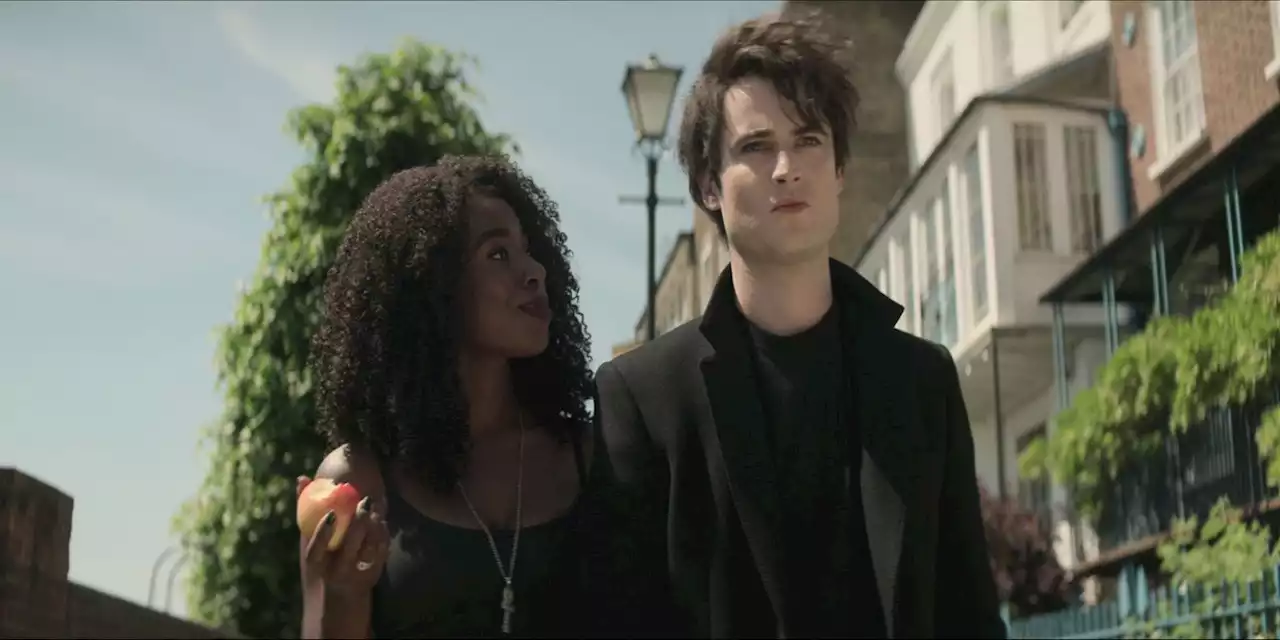 Why 'The Sandman's 'The Sound of Her Wings' Brings Me HopeWith “The Sound of Her Wings,' TheSandman has proven that it is just as inspiring, just as life-affirming, as its source material.
Read more »
 Should I Care for My Loved Ones, or Live the Life I Want?Dear Care and Feeding: I know my family would be so much happier if we abandon this L.A. life for Maine.
Read more »
 Life Expectancy in the U.S. Just Had a Historic DropLife Expectancy in the U.S. Just Had a Historic Drop—Again
Read more »