Science, Space and Technology News 2024
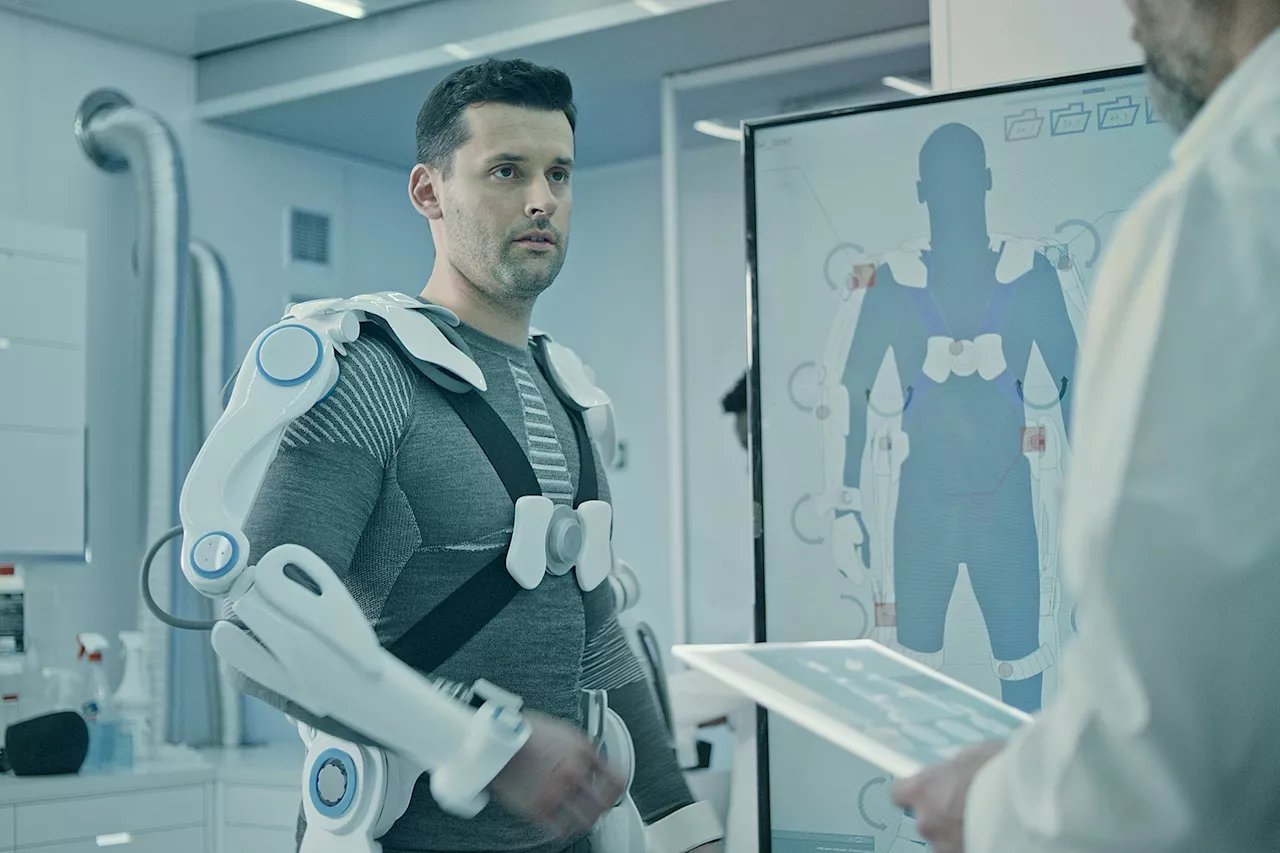
Researchers have developed an AI-enhanced controller for exoskeletons that learns to support various movements such as walking and running without individual calibration. This system reduces energy expenditure significantly, making it a promising tool for enhancing human mobility efficiently.
A new AI controller for exoskeletons, capable of learning different human movements without specific programming, has demonstrated substantial energy savings, marking a major step forward in wearable robot technology. Imagine safer, more efficient movements for factory workers and astronauts, as well as improved mobility for people with disabilities. It could someday become a more widespread reality, thanks to new research published on June 12 in the journalCalled “exoskeletons,” wearable robotic frameworks for the human body promise easier movement, but technological hurdles have limited their broader application, explained Dr. Shuzhen Luo of Embry-Riddle Aeronautical University — first author of theTo date, exoskeletons must be pre-programmed for specific activities and individuals, based on lengthy, costly, labor-intensive tests with human subjects, Luo noted. Researchers developed a full-body musculoskeletal human model consisting of 208 muscles , as well as a custom hip exoskeleton , then leveraged artificial intelligence to simulate multiple activities before deploying the learned controller on human subjects. Credit:“This new controller provides smooth, continuous torque assistance for walking, running, or climbing stairs without the need for any human-involved testing,” Luo reported. “With only one run on a graphics processing unit, we can train a control law or `policy,’ in simulation, so that the controller can effectively assist all three activities and various individuals.” Dr. Shuzhen Luo of Embry-Riddle Aeronautical University , whose work appears in “Nature” on June 12, 2024, discusses her research related to AI-powered robotic exoskeletons, during an internal poster presentation. Credit: Embry-Riddle/David MasseyDriven by three interconnected, multi-layered neural networks, the controller learns as it goes — evolving through “millions of epochs of musculoskeletal simulation to improve human mobility,” explained Dr. Luo, assistant professor of Mechanical Engineering at Embry-Riddle’s Daytona Beach, Florida, campus. The experiment-free, “learning-in-simulation” framework, deployed on a custom hip exoskeleton, generated what appears to be the highest metabolic rate reductions of portable hip exoskeletons to date — with an average of 24.3%, 13.1%, and 15.4% reduced energy expenditure by wearers, for walking, running and stair-climbing, respectively. These energy reduction rates were calculated by comparing the performance of human subjects both with and without the robotic exoskeleton, Su of NC State explained. “That means it’s a true measure of how much energy the exoskeleton is saving,” said Su, associate professor of Mechanical and Aerospace Engineering. “This work is essentially making science fiction reality — allowing people to burn less energy while conducting a variety of tasks.”The approach is believed to be the first to demonstrate the feasibility of developing controllers, in simulation, that bridge the so-called simulation-to-reality, or “sim2real gap” while significantly improving human performance. “Previous achievements in reinforcement learning have tended to focus primarily on simulation and board games,” Luo said, “whereas we proposed a new method — namely, a dynamic-aware, data-driven reinforcement learning way to train and control wearable robots to directly benefit humans.” The framework “may offer a generalizable and scalable strategy for the rapid, widespread deployment of a variety of assistive robots for both able-bodied and mobility-impaired individuals,” added Su.As noted, exoskeletons have traditionally required handcrafted control laws based on time-consuming human tests to handle each activity and account for differences in individual gaits, researchers explained in the journal “Nature.” A learning-in-simulation approach suggested a possible solution to those obstacles. The resulting “dynamics-aware, data-driven reinforcement learning approach” dramatically expedites the development of exoskeletons for real-world adoption, Luo said. The closed-loop simulation incorporates both exoskeleton controller and physics models of musculoskeletal dynamics, human-robot interaction and muscle reactions to generate efficient and realistic data. In this way, a control policy can evolve or learn in simulation.Future research will focus on unique gaits, for walking, running or stair climbing, to help people who have disabilities such as stroke, osteoarthritis, and cerebral palsy as well as those with amputations. Reference: “Experiment-free exoskeleton assistance via learning in simulation” by Shuzhen Luo, Menghan Jiang, Sainan Zhang, Junxi Zhu, Shuangyue Yu, Israel Dominguez Silva, Tian Wang, Elliott Rouse, Bolei Zhou, Hyunwoo Yuk, Xianlian Zhou and Hao Su, 12 June 2024,paper was authored by Shuzhen Luo of Embry-Riddle Aeronautical University, with Menghan Jiang, Sainan Zhang, Junxi Zhu, Shuangyue Yu, Israel Dominguez Silva and Tian Wang of North Carolina State University; and corresponding author Hao Su of North Carolina State University and the University of North Carolina at Chapel Hill; Elliott Rouse of the University of Michigan, Ann Arbor; Bolei Zhou of the University of California, Los Angeles; Hyunwoo Yuk of the Korea Advanced Institute of Science and Technology; and Xianlian Zhou of theYufeng Kevin Chen of the Massachusetts Institute of Technology provided constructive feedback in support of the paper, “Experiment-free exoskeleton assistance via learning in simulation.” The research was supported in part by a National Science Foundation CAREER award ; the National Institute on Disability, Independent Living and Rehabilitation Research ; a Switzer Research Distinguished Fellow ; the NSF Future of Work ; and theIn keeping with “Nature’s” publication policies, any potential “competing interests” were disclosed in the paper. Su and Luo, a former postdoctoral researcher at NC State who is now on the faculty at Embry-Riddle, are co-inventors on intellectual property related to the controller described here.SciTechDaily: Home of the best science and technology news since 1998. Keep up with the latest scitech news via email or social media.Scientists have advanced quantum teleportation by mitigating noise interference through a novel method involving hybrid entanglement, achieving close to 90% fidelity in teleporting quantum states,…
United States Latest News, United States Headlines
Similar News:You can also read news stories similar to this one that we have collected from other news sources.
 1st annual space piracy conference aims to combat space crime and smugglingThe First Annual Space Piracy Conference, scheduled for early next year by the Center for the Study of Space Crime, Policy, and Governance (CSCPG), will gather experts to address growing concerns of space crime and smuggling, discussing risks and solutions from various perspectives.
Read more »
 'Space is the limit' for area's lone 2024 graduate to join the U.S. Space ForceFollow us here to get the latest top headlines with KENS 5 anchor Sarah Forgany every weekday!
Read more »
 30 Genius Backyard Accessories That Will Transform Your Space for Under $100Digital destination for sophisticated men & women. Live your best life with expert tips and news on health, food, sex, relationships, fashion and lifestyle.
Read more »
 Scientists 'Absolutely Gutted' as Door Jammed on Expensive Space Telescope, Blocking Its View of SpaceScience and Technology News and Videos
Read more »
 New research investigates how short-term space travel affects 'space tourists'New studies show that space tourists experience some of the same body changes as astronauts who spend months in orbit. These changes mostly revert to normal after people return home.
Read more »
 Five Mizzou Standouts Earn Spots on Phil Steele’s Preseason All-SEC TeamsSteele split five Tigers between his Preseason All-SEC First Team, Second Team and Fourth Team.
Read more »