
Amidst a dire worker shortage in agriculture, the PTx Trimble OutRun suite of tillage products is taking on one of the key pain points in mechanized agriculture.
suite of tillage products is taking on one of the key pain points in mechanized agriculture. Workers are becoming increasing hard to find, yet the time windows for preparing the ground for planting, called tillage, can be quite short due to weather and other factors.
Autonomous machinery changes the game. Most autonomy products for agriculture have focused on the harvest cycles. With OutRun, AGCO has expanded their offerings to tillage. The key benefits lie in addressing labor availability shortages to achieve consistent, automated operations. The upshot? Skilled labor is freed up for jobs that require human know-how.the Davidson Prize from the American Society of Agricultural and Biological Engineers and the Association of Equipment Manufacturers. The award recognizes breakthrough innovations in agricultural engineering that improve efficiency, sustainability and productivity. OutRun was recognized for its ability to help farmers maximize yield and combat the labor shortage many farmers are facing around the world. OutRun will be compatible with AGCO brands and other OEMs/brands. Specifically, the initial product launch of OutRun tillage will support retrofit solutions for both Fendt 900 series and John Deere 8R. OutRun is a single platform covering multiple applications. The retrofit kit requires no changes to low-level machine control.Effectively done tillage is vital to a successful harvest. Tillage can happen in both the spring and fall depending on the needs of a particular farm. The major value in spring is accelerating the planting window. Deploying tillage just in front of planting can free growers up – so they can do both of these tasks at once, resulting in more timeliness of planting. In fall, tillage can often be the last priority, as all hands are on deck to focus on harvest activities. Timely tillage after harvest increases the nutrients that are worked into the soil, which will improve fertilization for next season’s harvest. With autonomy, farmers can deploy tillage at the optimal time, while still having their skilled labor deployed to harvest operations. This maximizes their benefit for both the current season’s yield and preparing the soil for next season’s crop. In fact, according to AGCO, OutRun tillage tools help avoid costly delays, “up to 1% yield loss per day when planting is delayed outside the planting window and up to 50% nitrogen loss if fertilizer isn’t incorporated in time.”OutRun addresses challenges in mission planning. The workflow requires a full pre-planned mission to cover entire field yet with the expectation of optimal paths with flexibility for farmer input. This includes accounting for zones with special handling . AGCO addresses these needs with a coverage path planner that allows user customization as needed. There are also tools for remote start, pause, and resume that mimic in-field decision-making. Mission monitoring entails smart alerts, remote visibility, and leveraging live and historical data. The system must operate independently by default, but be ready to engage the user when needed. It needs to accurately define what needs attention but avoid over-alerting the operator. In essence, as AGCO puts it, “the experience should make the user feel like they’re ‘riding along’ remotely.” OutRun provides system notifications tailored to context and severity, including support for custom notifications. Also, live data and video feeds, plus access to still images and historical metrics, are available to the user. Nevertheless, where possible the autonomy handles minor issues without interrupting the user. This latest OutRun product offers wider detection zones and dust resilience, compared to previous iterations. However, the use of wide implements changes sensor field-of-view requirements, which can be exacerbated in a dusty environment. If there are too many interruptions due to false-positive detections, the user is frustrated and the costs are real. OutRun addresses these challenges by validating the full range of existing sensors, as well as evaluating tillage-specific sensors. Methods for dust filtering are applied.Nevertheless, it is essential to design perception override capabilities that allow remote handling of false-positives by the farm crew. Dinen Subramaniam, product launch manager of Outrun, noted that monitoring quality of tillage is extremely important, “because you don’t want to find out something was off deep into a tillage operation.” He emphasized that autonomy’s next stage is addressing logistics on the farm. Autonomy can allow a shift from sequential activities – which has been the way of farming from the beginning -- to parallel activities that can encompassed disparate tasks. In wheat harvesting, for instance, the combine needs to be constantly on the move capturing wheat which is dumped into a grain cart traveling alongside the combine. When a cart’s capacity is reached, it pulls away and another cart sidles up to the combine. A full cart trundles to a nearby truck with a commodity trailer behind. When this tractor-trailer is full, an empty rig must step in to keep things moving. But there’s more to the logistics dance. The fully loaded trucks are off to a grain elevator somewhere in the region, where there can be traffic jams which in turn affect the ability of the truck to return to the harvest field for the next load. All this on just one farm. Imagine how these factors combine when the entire farming region is doing the same thing. And there’s an economic angle – the grain elevator operators compete with one another on the price paid to every load of grain. The closest grain elevator may not have the best price, so that a longer drive to a better-paying elevator becomes attractive. This is a time versus money play that can be found in any logistics operation. It is a continuing dance. Mr. Subramaniam noted yet another benefit based on customer feedback. The customer divulged that, during harvesting, he needs to keep over one hundred tires inflated across the various wheeled equipment in play. So, if a former grain cart driver could do nothing but take care of tire inflation, that alone is a significant benefit.There’s a human angle as well. An OutRun customer in Nebraska shared that juggling farm and family becomes easier with autonomous machines. He was recently able to leave his equipment running in the field and, while monitoring operations on his phone, he could cheer on his daughter at her championship volleyball game.
Tillage Driver Shortage Ag Autonomy
United States Latest News, United States Headlines
Similar News:You can also read news stories similar to this one that we have collected from other news sources.
 Tesla's first fully-autonomous car drove itself to its Texas ownerBusiness Insider tells the global tech, finance, stock market, media, economy, lifestyle, real estate, AI and innovative stories you want to know.
Read more »
 Tesla's first fully-autonomous car drove itself to its Texas ownerBusiness Insider tells the global tech, finance, stock market, media, economy, lifestyle, real estate, AI and innovative stories you want to know.
Read more »
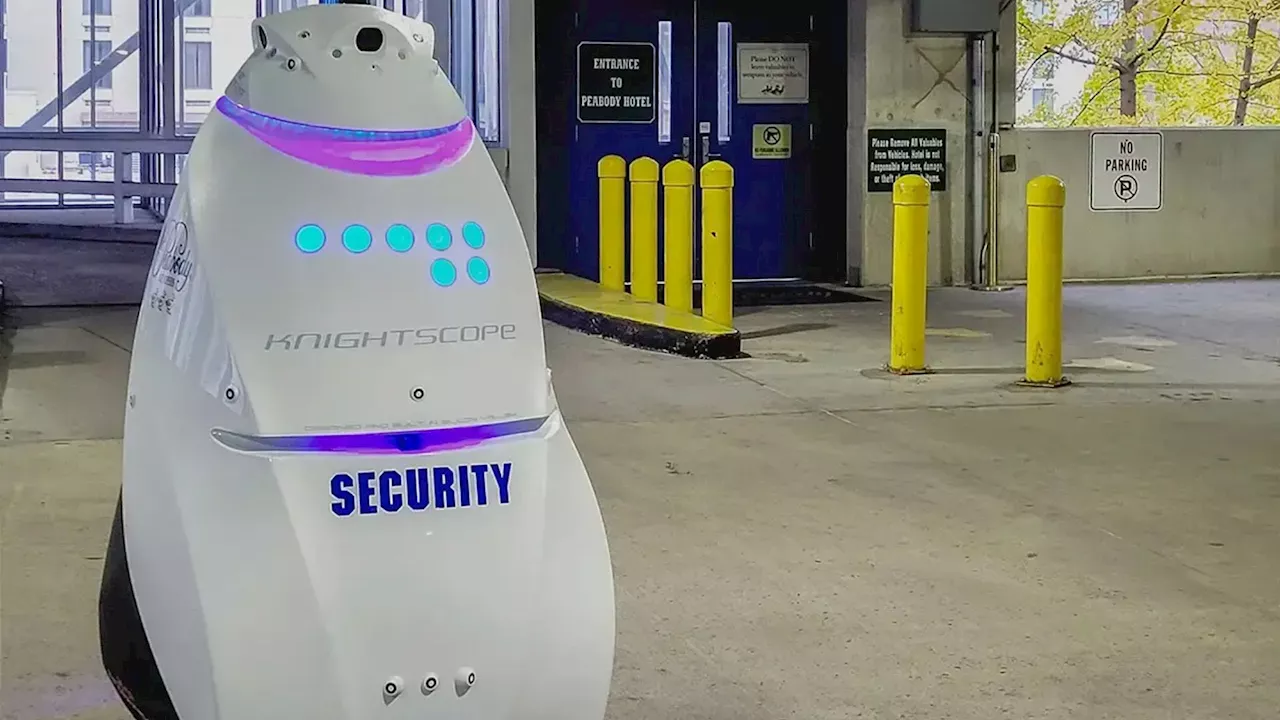 US: Dublin police to get autonomous safety robot to boost public safetyThe autonomous robot will work in long shifts, and will then return to charging docks on its own for recharging its battery.
Read more »
 Decoding Tesla’s New “Fully Autonomous” Car Video—and What It Isn’t Telling YouA new 30-minute video shows a Model Y driving itself from the factory to a customer’s home.
Read more »
 Tesla’s Viral ‘Autonomous’ Car Delivery Video Is Splitting the InternetIn a 30-minute video, Tesla claims a Model Y drove itself from the factory to a customer’s home. But online, not everyone is convinced.
Read more »
 Autonomous robots to safely segregate radioactive waste at UK nuclear plantUsing robotics provides the ability to use technology to more accurately categorize the radioactive waste, avoiding using more costly waste routes when they aren’t required.
Read more »