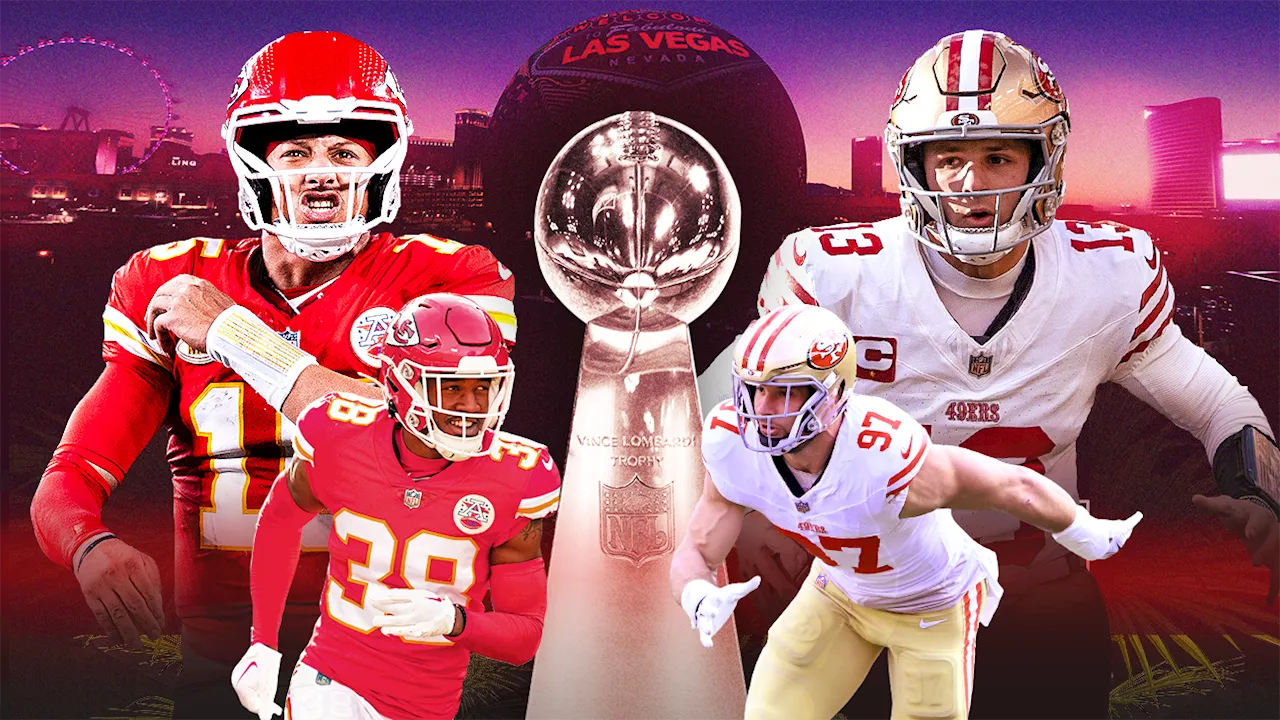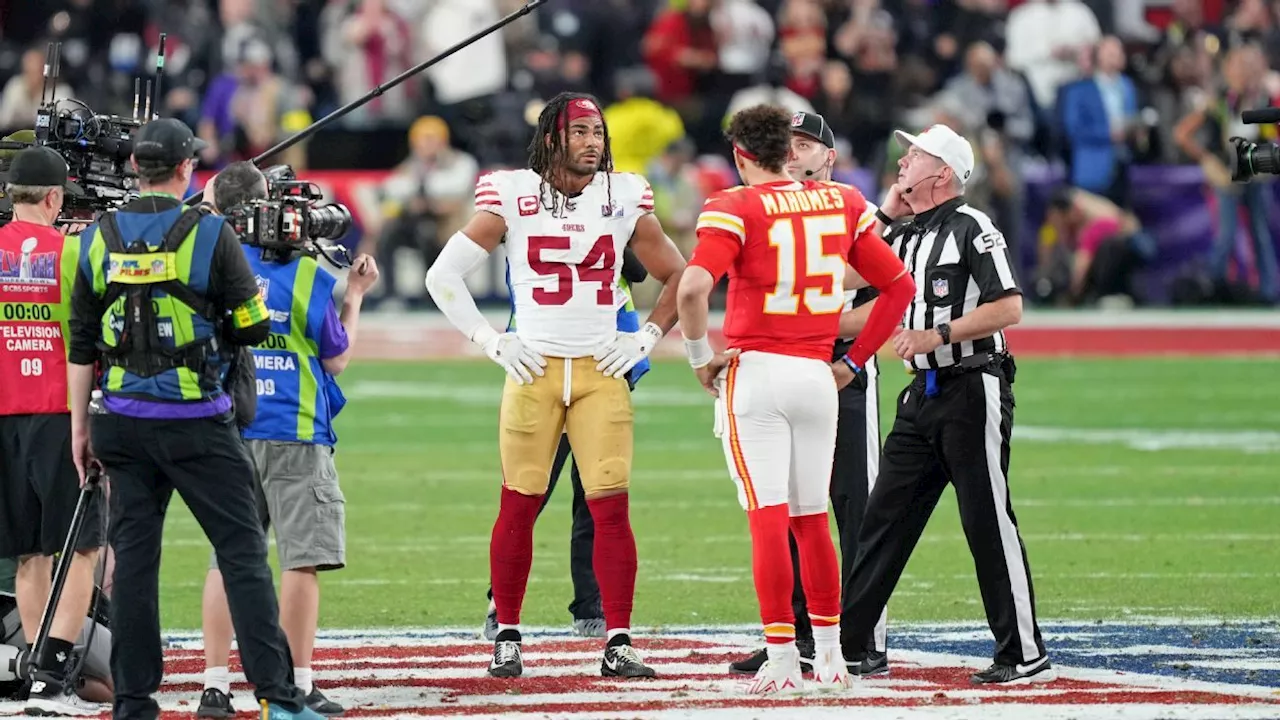
The Chiefs wanted the ball second in overtime in the Super Bowl. The 49ers wanted the ball first -- and got it. Did Kyle Shanahan really make the wrong call?
Jeff Saturday and the"Get Up" crew debate who should shoulder the blame after the 49ers' OT loss against the Chiefs in the Super Bowl. , with episodes released once a week. Barnwell joined ESPN in 2011 as a staff writer at Grantland.
Follow him on Twitter here:, but one conversation that keeps happening has pulled me back in. I touched on San Francisco coach Kyle Shanahan's decision toon the second possession of overtime -- I suspected the conversation Monday morning would work on finding a scapegoat for what had gone wrong. Given Shanahan's issues inYou could argue his scapegoat instead became defensive coordinator Steve Wilks, who came within a fourth-down stop of winning a& Co. multiple touchdowns in the process. More realistically, San Francisco lost for several reasons, none of which should be the single sole factor to blame.Having had a week to digest arguments, it seems like a good time to take a longer look both at Shanahan's specific decision and what your favorite team's coach should choose if he's lucky enough to make it tonext season. Is it as simple as following what the Chiefs did? I'm not so sure. Let's run through the arguments I've seen in favor of choosing to get the ball first or second and evaluate whether they hold up: "We already know what to do from college football. Go second so you can know what you need. Problem solved." This is the argument I saw most often about this decision, and it's just wrong. While there's certainly a benefit to getting the ball second -- let's call this being Team 2 from this point forward -- and knowing what you need, there are two major differences between the NFL's playoff overtime process and college football's. One is field position: The NFL's rule starts each possession with a standard kickoff, while college football overtime begins on the 25-yard line for two possessions before starting on the 3-yard line for the third overtime.. In college football, teams always get a chance to either match or top the first team's score on their drive, so there's not much thought: Most teams will prefer to be Team 2 and know what they need if they want to win. With that being said,If the two NFL teams are tied after they each get one possession with the football, though, Team 1 gets the ball for the third possession of overtime with the opportunity to win by scoring a field goal or touchdown -- without giving the ball back to the opposing team. That's a dramatic advantage! Remember that from 1994 to 2011, when NFL teams were able to win in overtime by kicking a field goal and without needing to give the opposition another possession, teams that won the coin toss won the game. If Team 1 gets to the third possession of overtime, it's essentially playing a game as if it had won the toss under the league's old playoff rules. That 60% number also underestimates Team 1's chances of winning on drive No. 3 of overtime. The NFL was spurred toin part by the improving performance of kickers on long-distance field goals, which has only continued. From 2000 to 2011, kickers hit just over 55% of their field goals in the 50- to 59-yard range. Over the past five seasons, that mark is up to 66.6%. The league hasfrom the 20-yard line to the 25, adding 5 free yards for offenses. With defenses tired after a full game and another possession of overtime, it also should be easier to move the ball. Teams might need only 35 yards on that third drive to get into field goal range for a good kicker."There's no chance of getting the ball for a third possession, because whichever team goes second will just go for two or make whatever decision it needs to make to avoid letting the opposing team get the ball back." Knowing what you need is the benefit of getting the ball second. For Team 1, getting the ball third is going to be a bigger advantage than knowing what it needs and taking it second, but the trade-off is it might never get to realize that opportunity. Going second means Team 2 always get the second-mover advantage on that second possession and it can make its decisions accordingly. That's the trade-off being made by choosing first or second. Would you rather have a smaller advantage you're guaranteed to see or a significant advantage you might never get to enjoy? The answer depends on how confident you are about getting to that third drive, which many have correctly pointed out will be influenced by that second-mover advantage. If Team 2 knows Team 1 will have a huge advantage on that third possession, Team 2 should be aggressive in trying to top Team 1 and win on the second possession of the game. We didn't see the Chiefs forced to any sort of meaningful decision in the Super Bowl, though they needed to go for it on Will Team 2 actually be that aggressive in reality? It's hard to say. This is uncharted territory -- Super Bowl LVIII was theplayed under this format -- and it's hardly as if coaches are as aggressive as the evidence suggests they should be during regulation, which is a game state everyone's already familiar with and should understand. It's easier to think about why this might be an issue if we split it out by what happened on Team 1's opening possession of overtime:Great! Now, Team 2 has that ideal advantage we talked about on the third possession, but it has it on the second possession instead; it can win with a field goal and doesn't have to give the opposing team a chance to match. That's a great situation to be in, and it both makes getting the ball second a more valuable proposition and should encourage Team 1 to be more aggressive than normal on their first possession to avoid giving Team 2 that advantage.Stephen A. Smith wonders if 49ers coach Kyle Shanahan has the fortitude to win a Super Bowl after blowing another lead in the big game. At the same time, there will be plenty of scenarios where Team 2 gets the ball and also doesn't score, like a game between two excellent defenses or in terrible weather conditions. Maybe both teams take a sack on their opening drives and end up in fourth-and-long and can't even consider going for it. Team 2 could end up failing on a fourth-and-short outside of field goal range, as the Chiefs could have against the 49ers. They could miss a field goal. They could also have a conservative coach who makes suboptimal decisions on fourth downs in general and leans on"trusting his defense" and punts as opposed to trying a long field goal and running the risk of handing the opposing team a short field. We've seen coaches make inexplicable decisions during the regular season; in 2022, Broncos coach Nathaniel Hackett' chances of converting were better than that of picking up a fourth-and-5. Don't assume Team 2's coach will run things like he's John Harbaugh or Dan Campbell.Here's the scenario that played out Sunday. The 49ers got inside the red zone but stalled out when right guardfor the pass protection gaffe; after getting to see the footage, it was more likely Burford's mistake. That's my bad.) On fourth-and-4, Shanahan sent out rookie kicker, who hit a 27-yard field goal to give the 49ers a 22-19 lead. We'll talk more about Shanahan's decision-making later, but you know what the Chiefs did next. Trailing by 3 points, Team 2 absolutely should be more aggressive on its opening possession of overtime. The implied impact of handing the ball back to Team 1 in a field goal-and-win situation should justify leaning toward going for it in just about every marginal situation, since a touchdown wins the game and a field goal still leaves Team 2 as a huge underdog. Ideally, coaches will adjust accordingly, but I've been, and there are still plenty of coaches who value making a safer decision that extends the game over a riskier one that gives them a better chance of winning. Let's take the Super Bowl and change the facts ever so slightly as an example. On that final possession of overtime,on a third-and-6 from the Kansas City 46-yard line for a 13-yard completion. It might be difficult to imagine a world in which Chiefs wide receivers drop passes, but let's pretend Rice drops that ball. On fourth-and-6 and out of field goal range while needing at least a field goal to extend the game, the Chiefs would have had to go for it. Nobody is arguing that one. What if that third-and-6 drop came on the San Francisco 36-yard line? Now, Team 2 has fourth-and-6 for its season -- while also needing to then score a field goal or touchdown afterwards -- or the possibility of hitting a 54-yard field goal and trying to win a game where it isn't guaranteed to get the ball again. With, the Chiefs probably would feel good about that field goal, but with Mahomes, they'd also likely be thinking they can convert fourth-and-anything. Icoach Andy Reid would go for it, but there are definitely teams that kick the field goal in that situation. Move the ball forward 20 more yards. Now it's fourth-and-6 from the 16-yard line, which means a 34-yard field goal. Over the past five seasons, kickers have converted 34-yard field goals just under 90% of the time, and eliminating blowout scenarios, teams have converted fourth-and-6 just over 47% of the time. Even acknowledging that going for it and succeeding puts Team 2 in a much better scenario than kicking and playing defense against Team 1, are coaches really going to pass up something close to a surefire kick to extend the game versus a go-for-it opportunity that might be something below a 50-50 shot? This is just one scenario, but you get the idea: While it might seem easy to assume Team 2 will go for it when it trails by a field goal to avoid a third possession in overtime, I believe there are plenty of scenarios where Team 2 will kick and hand the ball to Team 1. Even if Team 2 gets more aggressive on fourth down to avoid the third possession, it would also fail on some of those fourth-down attempts, which would hand Team 1 the victory without needing a third possession.fourth down, because its choices are a touchdown or no tomorrow. There's no decision-making needed during the possession. If Team 2 scores a touchdown, though, there's an important decision to be made. Should it go for 2 to prevent Team 1 from getting a third possession with a huge advantage? In the vast majority of cases, yes. Over the past five seasons, teams have converted just over 50% of their 2-point tries. If Team 2 thinks its chances of converting a 2-pointer are better than its chances of winning against Team 1 in a third-possession situation, it's better off going for 2. Whether you think Team 2's chances of winning without the ball starting with possession three are 40%, 35%, 30% or even lower, it's clear the 2-pointer is the better decision. Again, though, can we assume NFL coaches will actually act optimally? It's only recently that we've seen some teams warm up to the idea ofor attempting the two-point conversion on their first touchdown while down 15. Even if a team is a significant underdog and would benefit from shortening the game to one play, we've often seen teams kick the extra point after a late touchdown to tie the game as opposed to trying to win the contest with a 2-pointer. Let's say it becomes clear Team 2 will always go for 2 after scoring a touchdown to prevent the third possession from occurring. Does it make sense for Team 1's strategy to react?If you want to talk about a dominating situation, consider what would happen after a Team 1 touchdown on the opening drive. If it goes for two and converts, Team 2 would be forced to drive the length of the field, score a touchdown and then convert its own 2-pointer just to keep the game going. If Team 1 scores eight points on the opening drive, it's either going to win before touching the ball again or get the ball back with that wildly advantageous third possession where it can win with just a field goal.. If the 2-pointer is a 50-50 proposition and Team 1 knows Team 2 is going for 2 if it scores a touchdown, Team 1 can kick the extra point and know Team 2 is going to win 50% of the time if it scores a touchdown. 49ers linebacker Fred Warner won the coin toss in overtime and chose to receive the ball, setting up the Chiefs to have the second possession of Super Bowl LVIII. If Team 1 goes for 2, it will fail 50% of the time and then lose on a Team 2 touchdown, since Team 2 can simply kick an extra point to win. Team 1 could also lose, though, if it converts the 2-pointer, has it matched by Team 2 and then fails to score on the third possession. That probably means Team 1 loses about 58% of the time if it goes for 2 and Team 2 manages to also score a touchdown. Given how rare playoff overtime has become, it'll take a long time before any sort of playoff meta establishes itself and teams can say with confidence they'll know what the other team will do. I think it's safe to say Team 1 has to be worried Team 2 will go for 2 if both score a touchdown, but you can't say Team 2 will in every situation, given how coaches typically treat similar situations. Unless Team 1 is truly a dominant team from 2 yards out, it has to take going for 2 on the opening score off the table.As revealed by the two sides of Sunday's game, depends on who you ask. Shanahan said after the game the 49ers' analytics department suggested hein overtime. The Chiefs were thrilled to get the ball second, which was apparently Chiefs statistical analysis coordinator Mike Frazier's advice to Reid to select if Kansas City won the toss. The Chiefs and the 49ers are two of the NFL's most respected organizations, so how could their respective analytics departments come to different conclusions? That could be the case if there wasn't much of a difference between the two options. When ESPN's Brian Burke built a model to test the new overtime rules in 2022, he found thatif Team 2 didn't go for 2 after it scored a touchdown. That mark fell to 50.2% if Team 2 always went for 2 after scoring, denying Team 1 an opportunity for a third possession.. Four people had their opinion at almost 50-50. Three leaned toward taking the ball first. Three others felt confident they preferred taking the ball second. With all that in mind, it's no surprise that we landed on two teams with two different opinions about what represented optimal strategy with the overtime coin toss. It's also important to adjust these models for the game situation and teams and players involved. While those adjustments might not result in dramatically different changes to the findings and conversations above, there are allowances teams might want to make when they're playing against a quarterback like Mahomes. Many have suggested Shanahan got that wrong."Shanahan screwed up because he gave the ball to Mahomes with the chance to win the game with a touchdown." This is not as simple as some people have made it out to be. Of course, no team wants to be defending for its playoff life against Mahomes, but that's a situation that would be scary whether the team faces him on the first or second drive. If the 49ers had taken the ball second, they would have been sending out a gassed defense that had just faced an 11-play drive in the two-minute drill. Had the Chiefs scored a touchdown as Team 1, people would have been criticizing Shanahan for putting all the pressure on Purdy, his second-year quarterback, to match Mahomes with a touchdown. Letting Mahomes go second gave the Chiefs the advantage of being more aggressive on fourth down, which makes their offense scarier than it would be during a typical drive. Every team's better with an extra down, but the Chiefs and their ruthless efficiency would be even more devastating if Reid could open up the playbook on second and third down while knowing he would go for it on fourth down. If Mahomes and Reid had needed a touchdown, they would have been more likely to score than they would be on a typical drive, if only by virtue of having that extra play in their pocket.on Monday, it isn't as if the Chiefs' offense had been marching up and down the field all game. Their only touchdown before overtime came on a short field after a muffed punt. After scoring on the first two drives in the AFC title game, the Chiefs had gone 19 consecutive drives starting on their own side of the field without converting a single one into a touchdown. While Mahomes undoubtedly deserves credit for coming through at the most important possible moment, he and the Chiefs were trying to score on one of those long drives before overtime, too. Treating a Kansas City touchdown on the second possession as a lock is overconfidence. While it feels like Mahomes always comes through in these situations, there are scenarios where he has been less than automatic. His last drive in playoff overtime was during the 2021 season, when he and the Chiefs. The Chiefs won the toss and could have won the game with a touchdown, but Mahomes threw an interception on the third play, and Cincinnati drove into field goal range and kicked its way to The Chiefs probably would have gone for two if the teams had traded touchdowns, and depending on how you look at it, that could have been a problem for the 49ers. Over the past five seasons, Kansas City has converted a league-best 75% of its 2-point tries. I'll also note it has attempted only 12 over that stretch, tied for the second fewest of any team. Some of that is rarely trailing and needing 2-pointers, but we've also all seen the Chiefs make sloppy mistakes inside the 5-yard line, even during the Mahomes era and as recently as"The 49ers should have gone for it on fourth-and-4 instead of kicking a field goal." Now we're talking! After the game, when asked about the decision to kick a field goal on fourth-and-4 in overtime, Shanahan immediately shot down the idea."We never thought about it there on fourth-and-4," he told reporters."Even if we do go and score, they still can go down and match it and so there wasn't a thought there." -- but I still think Shanahan should and would have liked his chances of winning up seven as opposed to up three. As for the fourth-down play itself, it isn't as if the 49ers were hopeless in that situation. They had managed to get bothopen for potential touchdowns on the previous third-and-4 play, only for the pass protection to fail as mentioned earlier. Shanahan called for a unique play-action protection that had centerblitzed and would have been Purdy's responsibility either way, but given that the breakdown on the right side led to Jones running free and blowing up the play, it's hard to argue the protection was the right call at the right time. Shanahan said he wasn't thinking about going for it on fourth-and-4, and that's where his mistake came in. On third down, the 49ers came out in 11 personnel , and the Chiefs matched with their dime personnel package . There wasn't even a pretense of running the ball, as Purdy lined up in empty and had The league's most aggressive fourth-down offenses gain an advantage on third down by being willing to run in situations where teams typically throw the ball. Third-and-4 can be a run down for the Eagles, Lions and Ravens, because they're comfortable either picking up the first down or going for it on fourth-and-short. In 2023, on third down with 3-to-5 yards to go in games where each team still had at least a 20% win probability, Shanahan called 16 passes on 17 plays. The Lions called 29 passes on 39 plays. The Eagles called 24 passes on 41 plays. Purdy isn't, but the 49ers have a great rushing attack, and the Chiefs aren't a great run defense, even if they were better than expected against San Francisco.as a famous example, but if he wasn't thinking about going for it on fourth down, it had an impact on his third-down call. Running the ball on that third-and-4 could have converted on its own. It also could have set up a fourth-and-short that would have tipped the scales toward going for it and potentially converting for a touchdown. The bigger issue with what happened on third down was the pass protection, but if Shanahan was more open toward going for it on fourth-and-short, the 49ers would be a more dynamic offense on third down. Without knowing how things would play out, the 49ers probably would have been better off running on third-and-4, especially given how the Chiefs matched with their personnel.made the wrong choice is too confident. No, we couldn't have known Mahomes would score a touchdown when the Chiefs had gone seven quarters without a long TD drive. No, we don't know whether the Chiefs would have actually gone for it every fourth down while down three points or gone for two if the teams had matched touchdowns, denying Shanahan the benefit of the third-possession advantage. Handing Mahomes the ball second isn't empirically worse than having him touch it first, especially given that the 49ers' defense had just come off the field. There's never a good time to face Mahomes in overtime.the first time we've ever seen this overtime format play out. Assuming every fourth down and each decision-making scenario will play out the way it did in this first overtime and using that to judge Shanahan's choice isn't a smart way to approach decision-making, any more than it would be to assume Mahomes is doomed to fail because he threw that interception in overtime against the Bengals in the 2021 playoffs. I've taken major issues with, and I wish he'd handled the third-and-4 differently, but those are different conversations from choosing to be Team 1 or Team 2 in overtime. Without being caught up in the mystique, the simplest way for Shanahan to weigh things would have been to consider two key factors. Would it be worse for him to send a tired defense back on the field after it had just run around during an 11-play two-minute drill, or to give Mahomes an extra play to work with if the Chiefs needed a touchdown to tie the game? Without knowing how things actually panned out, I can see an argument for both sides. I might lean more toward being Team 2 than I did the night of the decision, but there's not a clear and obvious correct answer. As for what teams should do in the future, given how close each relative option is in terms of expected win rate, I would guess the soft factors related to each individual game probably play a significant role in determining what the best decision would look like.. The worst thing that can happen to Team 1 is a touchdown by Team 2 on the second possession of overtime, since that touchdown will either win the game or allow Team 2 to try a 2-pointer to win the game. If Team 1 feels confident it can either match a field goal or hold Team 2 scoreless, take the opening possession and it will likely reap the benefits of that incredibly valuable third possession. There's also a decent chance the team ends up getting one more possession than the opposing team if overtime extends deep into the second quarter of overtime. We can't guarantee that what happened in regulation will continue to play out in overtime, but if a team has a great defense or thinks the chances of a touchdown from Team 2 on its opening drive of overtime aren't high, going first is probably the right move.Dan Orlovsky discusses Kyle Shanahan and the 49ers' decision to take the ball first in overtime.or one where I felt I had a great offense and was confident about scoring a touchdown on the second drive of overtime. Team 2 would get the benefit of knowing what it needs, which might be as little as a field goal if it stops Team 1 on the opening possession. Team 2 can control the game with a touchdown on the second possession of overtime, which will either end the game in its favor or allow it to go for 2 and win the game without ever getting Team 1 its third-possession advantage. Team 2 would spend the entire drive under the pressure of knowing one mistake can end its season, but if it has a great quarterback, getting to play the entire drive with a clear head about how to approach fourth downs is extremely valuable.when there's bad weather with significant wind having an impact on one side of the field, I'd pick the side with the wind to my back and let the opposing team choose whether it wants the ball first. Most overtime games will end in the first quarter, giving the team with the wind a huge advantage in terms of field goal distance and field position for what might be the entirety of the extra period. That would outweigh the marginal benefit of choosing to get the ball first or second. Given those preferences, both teams' overtime preferences make sense. The 49ers were playing a low-scoring game and had stopped the Chiefs from producing long touchdown drives all game. The Chiefs had a quarterback they believed was unstoppable. In the end, what happened in overtime came down to execution, not the coin-flip choice.
United States Latest News, United States Headlines
Similar News:You can also read news stories similar to this one that we have collected from other news sources.
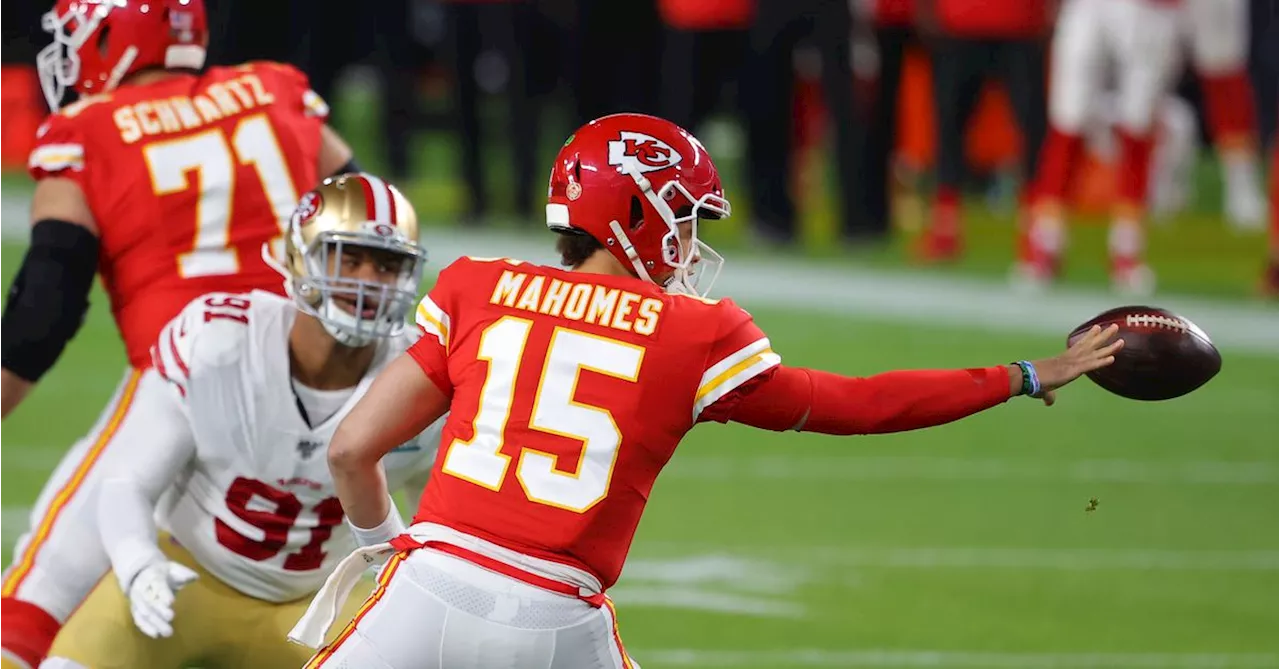
Super Bowl 2024 updates: ABC7 coverage of 49ers vs. ChiefsThe Niners have another chance to claim the NFL championship title following a loss to the Chiefs in 2020. Here's what to know ahead of the game:
Read more »
Super Bowl 2024 guide: 49ers-Chiefs picks, stats, predictionsWe covered big questions, QB matchup keys, stats to know, impact players, injury updates, betting advice and expert predictions. It's all here for Super Bowl LVIII.
Read more »
Super Bowl 2024: How to Watch, Stream the Chiefs vs. 49ers Game for Free on SundayThe countdown to Super Bowl Sunday is on. Here are the best ways to watch the big game for free.
Read more »
Super Bowl 2024: Everything to know, how to watch Chiefs-49ers matchupWhether you're looking to bet on the matchup or just want the inside scoop on the Niners and Chiefs, we've put together everything you need to know for Super Bowl LVIII.
Read more »
Super Bowl 2024 picks: Who we like in Chiefs-49ers to win Super BowlThe Field Gulls staff makes its predictions and picks for the 2024 Super Bowl in Las Vegas.
Read more »
49ers vs. Chiefs: Valley watch parties, deals, and restaurant specials for the Super BowlNicole Gutierrez is ABC15's ‘Things to Do’ reporter, focusing on stories highlighting local community gems, family attractions, restaurants and local haunts.
Read more »