


 +34

Astronomers have detected an act of extreme violence more than halfway across the known universe as a black hole shreds a star that wandered too close to this celestial savage. But this was no ordinary instance of a ravenous black hole.
The culprit appears to be a supermassive black hole believed to be hundreds of millions of times the mass of our sun located roughly 8.5 billion light years away from Earth. A light year is the distance light travels in a year, 5.
9 trillion miles . "We think that the star was similar to our sun, perhaps more massive but of a common kind," said astronomer Igor Andreoni of the University of Maryland and NASA's Goddard Space Flight Center, lead author of one of the studies. The event was detected in February through the Zwicky Transient Facility astronomical survey using a camera attached to a telescope at the Palomar Observatory in California. The distance was calculated using the European Southern Observatory's Very Large Telescope in Chile. "When a star dangerously approaches a black hole - no worries, this will not happen to the sun - it is violently ripped apart by the black hole's gravitational tidal forces -similar to how the moon pulls tides on Earth but with greater strength," said University of Minnesota astronomer and study co-author Michael Coughlin. "Then, pieces of the star are captured into a swiftly spinning disk orbiting the black hole. Finally, the black hole consumes what remains of the doomed star in the disk. In some very rare cases, which we estimated to be 100 times rarer, powerful jets of material are launched in opposite directions when the tidal disruption event occurs," Coughlin added. Andreoni and Coughlin said the black hole was likely spinning rapidly, which might help explain how the two powerful jets were launched into space at almost the speed of light. Massachusetts Institute of Technology astronomer Dheeraj Pasham, lead author of the other study, said the researchers were able to observe the event very early on - within a week of the black hole starting to consume the doomed star. While researchers detect tidal disruption events about twice per month, ones that produce jets are extremely rare. One of the jets emanating from this black hole seems to be pointing toward Earth, making it appear brighter than if it were heading in another direction - an effect called "Doppler boosting" that is similar to the enhanced sound of a passing police siren.and most galaxies have one of these at their core. But the tidal disruption event was so bright that it obscured the light of the galaxy's stars.Reporting by Will Dunham, Editing by Rosalba O'Brien
Scratch the next story
United States Latest News, United States Headlines
Similar News: You can also read news stories similar to this one that we have collected from other news sources.
 Astronomers caught a black hole slurping up a star like spaghettiWhen a star ventures a little too close to a black hole, the intense tidal forces suck into it like a giant noodle of star stuff in a cosmic (and much more chaotic) reenactment of that iconic scene in “Lady and the Tramp.” The black hole’s extreme gravitational pull shreds the star into thin strands of material—a process delightfully called “spaghettification.” When these noodle-like strips get sucked into the black hole, they release a powerful bright flare of energy. In September of 2019, the light from such a doomed encounter reached Earth.
Read more »
 NASA's Orion spacecraft gazes back at Earth and the Moon from distant orbitNASA said Orion is the safest spacecraft in the NASA fleet.
Read more »
 Astronomers Annoyed at Ludicrously Bright SpaceX-Launched SatelliteOne of the world's preeminent astronomy organizations is decrying a newly-released satellite that has become one of the brightest objects in the sky.
Read more »
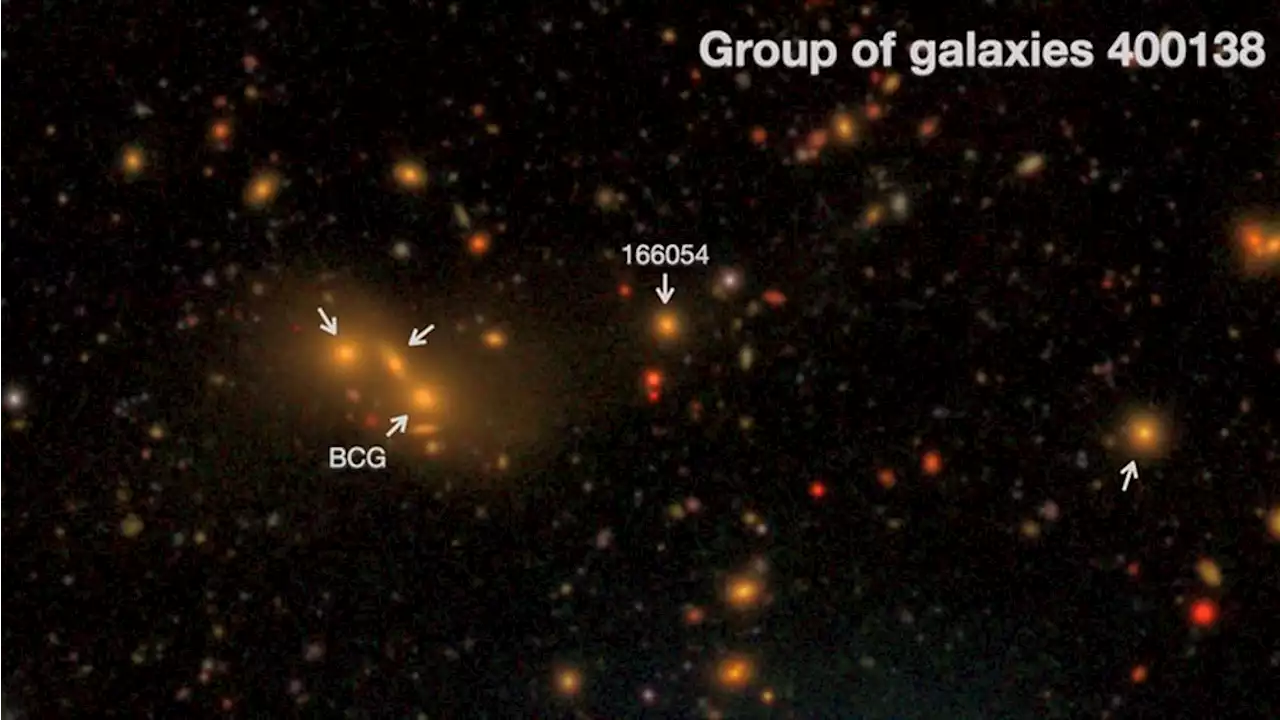 Astronomers Detect the Faint Glow of Stars in Between GalaxiesIt's hard to study stars orphaned from their galaxies because their light is so faint. But they hold important clues.
Read more »
 Astronomers Directly Image a Jupiter-Sized Planet Orbiting a Sunlike StarThe SHINE collaboration recently observed a Super-Jupiter within a young debris orbiting a nearby star. Credit: ALMA (ESO/NAOJ/NRAO); M. Weiss (NRAO/AUI/NSF)
Read more »
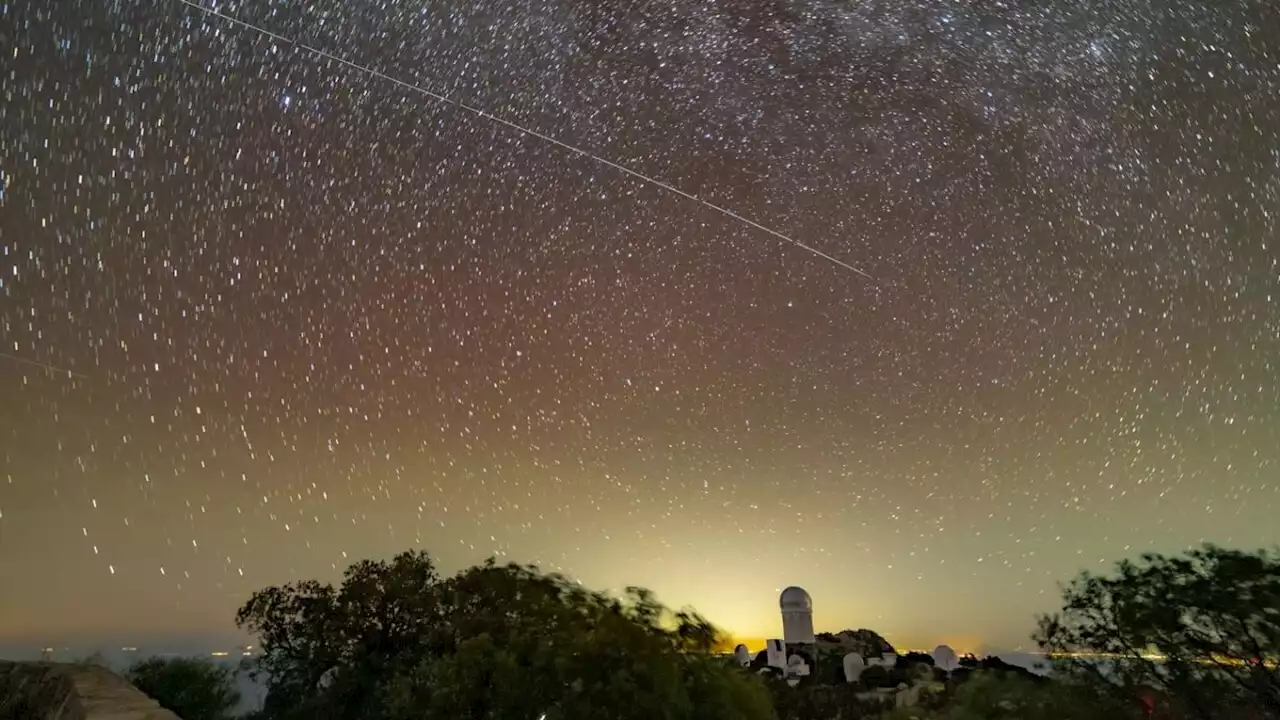 Astronomers denounce super-bright new BlueWalker 3 satelliteBoth optical and radio astronomy are at risk.
Read more »